A Professional Hazard
Let’s start off with an activity.
Watch video below. Before you move on to questions beneath it, try and summarize the technical content.

A YouTube element has been excluded from this version of the text. You can view it online here: https://pb.libretexts.org/effective/?p=47
Link to Original Video: tinyurl.com/retproturenc
- How easy was it to summarize the content?
- If it was difficult to do so, why?
- How could the speaker have made the content easier for you to understand?
Did you have difficulty understanding the innovative product that is being described?
If you are, it’s because that video is meant to be an example of technobabble nonsense—it’s actually
an example of an ‘inside joke’ that’s been circulating with engineers for the last 70 years.
What happens when our rhetorical communication loses its balance? The video above is just one example of Wayne Booth’s (1963)
pedant stance, or a corruption of logos appeals.
This chapter defines the
rhetorical stance and explores what happens when a mode of appeal becomes distorted or corrupted in communication.
The Rhetorical Stance
Drawing on Aristotle, Booth defines rhetorical balance and explores the consequences of misusing the modes of appeal:
“The common ingredient that I find in all of the writing I admire…is something that I shall reluctantly call the rhetorical stance, a stance which depends on discovering and maintaining in any writing situation a proper balance among the three elements that are at work in any communicative effort: the available arguments about the subject itself, the interests and peculiarities of the audience, and the voice, the implied character, of the speaker” (Booth, 1963, p. 141).
This means that there are three parts we need to think about when we consider rhetorical balance. Does this sound familiar at all it? It should. What do these parts make you think of? “Available arguments?” “Interests and peculiarities?” “Implied character”?
Booth’s three elements are the same as the modes of appeal:
- “the available arguments” = logos
- “interests and peculiarities” = pathos
- “implied character” = ethos
He finds that he admires writing that keeps these three elements in balance, a rhetorical balance, if you will. Whenever you craft a persuasive message, you should strive to maintain this balance.
However, this doesn’t mean that you will always have equal parts of ethos, pathos, logos. Depending on what scenario you’re in, you may need to emphasize one over the others, but that doesn’t mean that you neglect the others. Rather you need to respect them properly and ensure you don’t focus too much on one at the expense of the others.
Booth discusses rhetorical balance primarily through rhetorical imbalance: the three corruptions or perversions of the rhetorical stance. These rhetorical corruptions/perversions highlight the problems that arise when one mode of appeal is out of balance from the others. Let’s look at each one now.
The Pedant’s Stance
The pedant’s stance “consists of ignoring or underplaying the personal relationship of speaker and audience and depending entirely on statements about a subject—that is, the notion of a job to be done for a particular audience is left out” (Booth, 1963, p. 141).
Booth dedicates the bulk of his discussion to the pedant’s stance professor’s as an example. He recognizes that, as a group, professors commonly fall prey to this corruption. This is because they have a tendency to lecture students without ensuring that their audience is understanding the information they are attempting to convey. Thus, pedants do not bother to adapt information carefully for a specific audience; rather, they expect an audience to interpret and prioritize information on their own, instead of targeting the information particularly for a specific audience in a specific context.
The Advertiser’s Stance
Booth (1963) indicates that the advertiser’s stance “comes from undervaluing the subject and overvaluing pure effect: how to win friends and influence people” (p. 143).
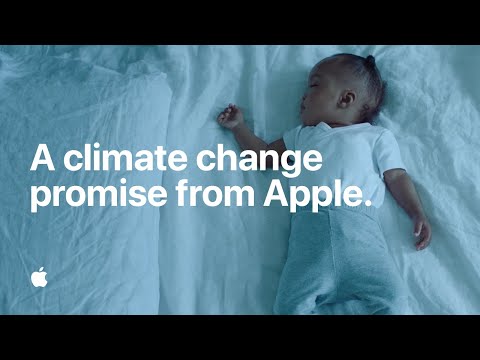
We can see an example of the advertiser’s stance in how companies use “greenwashing” to market their products. Greenwashing occurs when a company markets their product or service in such a way that it appears to be environmentally friendly, when, in reality, the product or service does not have, or hardly has, any environmental benefits. A good example of this are companies that sell bottled water. Often, the images on their labels use natural elements (mountains, rivers, lakes, etc.) even though the bottles themselves are hazardous for the environment.
Another more recent example comes from Starbucks. Starbucks recently made a commitment to banning single-use straws from their stores in order to reduce the amount of plastic waste. Instead, they would only use strawless lids. However, there areconcerns that the lids will use more plastic than the original straw-lid combo. This campaign has led to accusations of greenwashing against the company. While Starbucks does not dispute this is an issue, they stress that the plastic used for the new lids is much easier for recycling infrastructure to catch and reuse, as opposed to straws which are too small.
Similarly, a company can also boost their own public image by addressing the audience’s concerns about the environment. This is often done in combination with a pathos (an emotional appeal).
The Entertainer’s Stance
Finally, Booth defines the entertainer’s stance as the “willingness to sacrifice substance to personality and charm” (Booth, 1963, p. 144). In communication, entertainers prioritize their own ego gratification over establishing appropriate relation with an audience or delivering a coherent message. Thus, entertainers often focus excessively on gaining their audience’s approval or admiration, or, in some cases, contempt, while failing to establish their professional credibility and persuade their audience.
Did you realize that Dragon’s Den is a show about rhetoric? It focuses on the act of persuading others to fund an idea/product.
After watching the clip below, you will conduct a rhetorical analysis. Consider the questions below as you apply RCM 200 theory.

A YouTube element has been excluded from this version of the text. You can view it online here: https://pb.libretexts.org/effective/?p=47
- Who is saying what to whom and for what purpose?
- Is Steven’s pitch to the Dragons an example of effective persuasion communication?
- If not, which stance has Steven fallen into during his presentation?
- Considering a balanced rhetorical approach, how could Steven’s pitch been improved?
Chapter Quiz
The original version of this chapter contained H5P content. You may want to remove or replace this element.
- Booth states that rhetorical balance is essential in a given rhetorical situation. Specifically, he says that the most admirable writing is that which maintains a balance between three elements (which are the same as the modes of appeal): the available arguments (logos), the interests/peculiarities of the audience (pathos), and the character of the speaker (ethos).
- Of course, it may not be possible to perfectly balance all three modes of appeal in a given rhetorical situation. Sometimes one or two modes may need to emphasized over another. What matters is that you do not overdo it at the expense of the other modes of appeal.
- When the three modes are out of balance, this is known as a rhetorical corruption/perversion. He mentions three corruptions: the pedant's stance, the advertiser's stance, and the entertainer's stance.