

21.3: North American Trade
- Page ID
- 138590
\( \newcommand{\vecs}[1]{\overset { \scriptstyle \rightharpoonup} {\mathbf{#1}} } \)
\( \newcommand{\vecd}[1]{\overset{-\!-\!\rightharpoonup}{\vphantom{a}\smash {#1}}} \)
\( \newcommand{\dsum}{\displaystyle\sum\limits} \)
\( \newcommand{\dint}{\displaystyle\int\limits} \)
\( \newcommand{\dlim}{\displaystyle\lim\limits} \)
\( \newcommand{\id}{\mathrm{id}}\) \( \newcommand{\Span}{\mathrm{span}}\)
( \newcommand{\kernel}{\mathrm{null}\,}\) \( \newcommand{\range}{\mathrm{range}\,}\)
\( \newcommand{\RealPart}{\mathrm{Re}}\) \( \newcommand{\ImaginaryPart}{\mathrm{Im}}\)
\( \newcommand{\Argument}{\mathrm{Arg}}\) \( \newcommand{\norm}[1]{\| #1 \|}\)
\( \newcommand{\inner}[2]{\langle #1, #2 \rangle}\)
\( \newcommand{\Span}{\mathrm{span}}\)
\( \newcommand{\id}{\mathrm{id}}\)
\( \newcommand{\Span}{\mathrm{span}}\)
\( \newcommand{\kernel}{\mathrm{null}\,}\)
\( \newcommand{\range}{\mathrm{range}\,}\)
\( \newcommand{\RealPart}{\mathrm{Re}}\)
\( \newcommand{\ImaginaryPart}{\mathrm{Im}}\)
\( \newcommand{\Argument}{\mathrm{Arg}}\)
\( \newcommand{\norm}[1]{\| #1 \|}\)
\( \newcommand{\inner}[2]{\langle #1, #2 \rangle}\)
\( \newcommand{\Span}{\mathrm{span}}\) \( \newcommand{\AA}{\unicode[.8,0]{x212B}}\)
\( \newcommand{\vectorA}[1]{\vec{#1}} % arrow\)
\( \newcommand{\vectorAt}[1]{\vec{\text{#1}}} % arrow\)
\( \newcommand{\vectorB}[1]{\overset { \scriptstyle \rightharpoonup} {\mathbf{#1}} } \)
\( \newcommand{\vectorC}[1]{\textbf{#1}} \)
\( \newcommand{\vectorD}[1]{\overrightarrow{#1}} \)
\( \newcommand{\vectorDt}[1]{\overrightarrow{\text{#1}}} \)
\( \newcommand{\vectE}[1]{\overset{-\!-\!\rightharpoonup}{\vphantom{a}\smash{\mathbf {#1}}}} \)
\( \newcommand{\vecs}[1]{\overset { \scriptstyle \rightharpoonup} {\mathbf{#1}} } \)
\(\newcommand{\longvect}{\overrightarrow}\)
\( \newcommand{\vecd}[1]{\overset{-\!-\!\rightharpoonup}{\vphantom{a}\smash {#1}}} \)
\(\newcommand{\ket}[1]{\left| #1 \right>}\)
\(\newcommand{\bra}[1]{\left< #1 \right|}\)
\(\newcommand{\braket}[2]{\left< #1 \vphantom{#2} \right| \left. #2 \vphantom{#1} \right>}\)
\(\newcommand{\braopket}[3]{\left< #1 \vphantom{#2}\vphantom{#3} \right| #2 \vphantom{#1}\vphantom{#3} \left| #3 \vphantom{#1}\vphantom{#2} \right>}\)
\(\newcommand{\qmvec}[1]{\mathbf{\vec{#1}}}\)
\(\newcommand{\op}[1]{\hat{\mathbf{#1}}}\)
\(\newcommand{\expect}[1]{\langle #1 \rangle}\)
\(\newcommand{\dfn}[1]{\emph{\textbf{#1}}}\)
Free trade and “laissez-faire” capitalism are typically believed to be a “conservative” value. So, it may be surprising to hear that former U.S. President Trump opposed agreements like NAFTA and TTP, even though he was a Republican. Meanwhile, past presidents William Clinton and Barrack Obama, as well as the current President Joe Biden, all members of the Democrat party, supported them.
Globalist trade policies have often been called “neoliberal,” but this term is confusing. The “Neo” part is in many ways the opposite of liberalism. Since the Enlightenment, “liberal” has referred to a focus on expanding the rights and liberties of regular people, often against the power of governments. Today, the liberties being protected by neoliberalism are often those of corporations. In many cases, corporations have gained so much power over the lives of regular people that they are a more serious threat than governments.

NAFTA was an example of neoliberal policy that increased the liberty of corporations at the expense of people. In a 1992 presidential debate, billionaire Reform Party candidate Ross Perot argued:
“We have got to stop sending jobs overseas. It’s pretty simple: If you’re paying $12, $13, $14 an hour for factory workers and you can move your factory south of the border, pay a dollar an hour for labor,…have no health care—that’s the most expensive single element in making a car—have no environmental controls, no pollution controls and no retirement, and you don’t care about anything but making money, there will be a giant sucking sound going south.”
Perot went on to explain that although in the long run and from a global perspective, globalization makes economic sense, it was not necessarily good for America. He ultimately lost the election to Bill Clinton, who supported the North American Free Trade Agreement (NAFTA). Although NAFTA was an agreement between Canada, Mexico, and the United States, this text will focus on the U.S.-Mexican relationship.
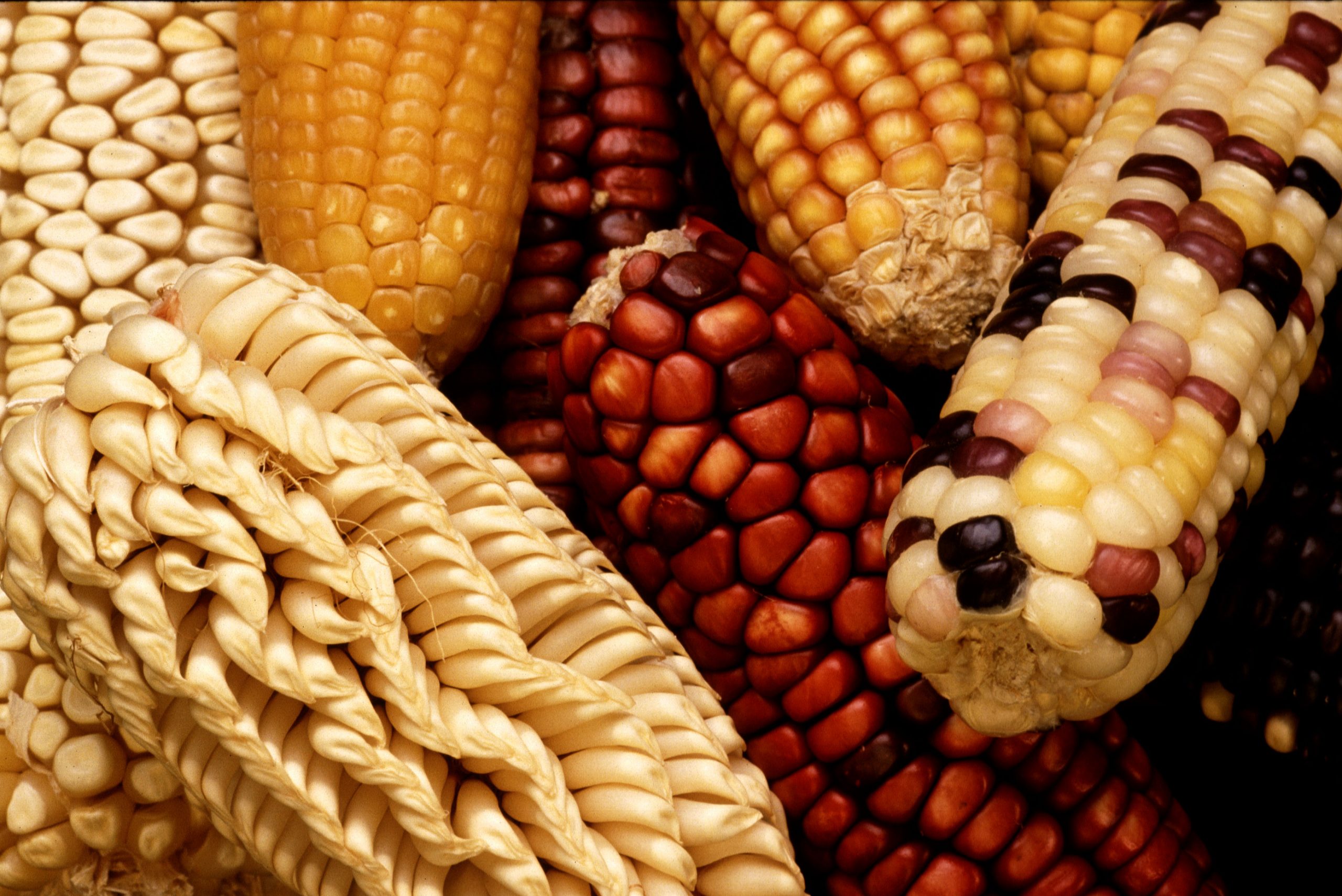
Starting on January 1, 1994, NAFTA was to create a free-trade zone in North America (Canada, Mexico, and the United States). One goal was to eliminate tariff barriers that made American exports more expensive in Mexico and Mexican exports more expensive in the U.S. As a result, Mexico has risen to the second-largest market for U.S. agricultural products, especially meat. Mexico has also become a large consumer of U.S. corn.
Corn is the leading staple crop in the world. Cheap U.S. corn has impacted the ability of Mexican farmers to compete and threatened the biodiversity of maize. Since corn is wind-pollinated, the indigenous varieties are in actual danger of being lost. If a pest or disease wiped out genetically-modified corn, it would become a global disaster if scientists had no indigenous varieties available to produce a new, resistant hybrid.

NAFTA has given rise to Mexican factories called maquialadoras, which were located just south of the border and made products for the US market. These factories manufacture goods using supplies shipped to them duty-free, which they then ship back north. Within the first five years, maquila employment had doubled. By 2004, maquiladoras accounted for 54% of Mexico’s exports to the U.S., and U.S. exports had grown to 90% of Mexico’s total exports.
Advantages for the U.S. manufacturers included:
- paying lower wages than in the U.S. (in 2015 the Mexican hourly wage averaged $0.55)
- fewer environmental and worker-safety regulations to follow
- less chance of organized labor strikes (although Mexico has fairly strict labor law)
After the Mexican recession of the 1990s, these jobs sometimes paid better than other available work for poor Mexicans. As Perot had predicted, until wages for factory workers in Mexico rise substantially, workers in the United States will not be able to compete for these jobs. Despite the U.S. recession in the early 2000s and competition from other even lower-wage areas like Asia, there are still over 3,000 maquiladoras along the US-Mexican border.
USMCA
The United States-Mexico-Canada Agreement (USMCA) entered into force on July 1, 2020. The USMCA replaced the North America Free Trade Agreement (NAFTA) by modernizing the original agreement's provisions. One area of noticeable update is intellectual property and digital trade. Other changes included: increased environmental and working regulations; greater incentives for automobile production in the U.S. (with quotas for Canadian and Mexican automotive production); more access to Canada's dairy market; and an increased duty-free limit for Canadians who buy U.S. goods online.