

6.2: Nonverbals (Body Language)
- Page ID
- 152957
Interestingly enough, your body language can shape not only who others perceive you to be but your body language can also shape who you perceive yourself to be.
- Please watch the following video. Be sure to take notes and be prepared to discuss in class or, if an online student, to write a paper.
Your Body Language Shapes Who You Are – Amy Cuddy
Points to note:
· What is pride? When is it displayed?
· What do we do when we feel powerless?
· She discusses gender. How so?
· If you pretend to be powerful, are you more likely to feel powerful?
· Can our bodies change our minds? How?
· What type of leader do you want?
· What percent change in testosterone do high-power people experience? Low-power people?
· What tiny tweak does she recommend before a stressful situation?
Cuddy is a professor at Harvard Business School. The TED Talk you’ve just watched is the second most-watched TED Talk in history.
Body Movement
Communication through body movements, including posture, gestures, facial expressions, eye behavior, touching, other movements of the limbs and body is called kinesics. Body shape, physique, posture, height, weight, hair, and skin color are physical characteristics associated with kinesics.
- Select one of the following topics and present a five-minute talk in class about it. You must have at least three sources, including one academic paper. The topic must be approved in advance by your instructor, and you will ideally use power points in your presentation.
Gestures reveal how people are feeling. People tend to gesture more when they are enthusiastic, excited and energized. People tend to gesture less when demoralized, nervous or concerned about the impression they are making. Body gestures can be classified into five main types:
· Emblems, which directly translate words or phrases
· Illustrators, which accompany and illustrate verbal messages
· Affect displays that convey emotional meaning
· Regulators that monitor, maintain or control the speaking of another
· Adaptors, which satisfy some need
Facial Expressions. It takes a great deal of training and self-discipline to maintain a “poker face” when one is happy or sad, angry or disappointed.
Eye Contact. Eye contact plays several roles in communication. It can regulate the flow, it can provide feedback by signaling interest (or lack of interest), it can convey emotion, and it can relate to the relationship between communicators. It’s a vital tool for leaders. Watch this video to learn how one leader used eye contact to make a friend.
Touch. Touch can obviously have romantic implications. But a French study found that when a waitress in a French bar briefly touched (or didn’t touch) the forearm of a patron while asking him what he/she wanted to drink, the size of a tip was increased. (Gueguen and Jacob, 2005)
Voice
How we use our voice is another form of nonverbal communication. We can emphasize certain words, change our tone, change our pitch, change the speed (rate) at which we are speaking, change our volume, and use pauses to both create a message and create a personal voice brand. Watch this video:
Vocal Branding: How Your Voice Shapes Your Communication Image
- Be prepared to discuss the importance of having a good voice. What are the five elements the speaker lists?
Now watch this video:
Opera Singer Tricks to have a more attractive voice
What makes a good voice? How do you maintain a lip trill? Describe the accordian analogy, What is the benefit of the accordion analogy? How can you avoid permanent damage to your vocal cords? What is the perfect speaking volume?
Appearance
It may or may not be fair, but our physical attractiveness can say a great deal about us, and it can have a great deal to do with how we are treated. Dress like a slut and it’s likely you’ll be treated like a slut. Dress like you deserve respect, and it’s likely you’ll be given respect, whether you deserve it or not. Our clothing can convey at least 10 messages about us to others:
· Our economic background
· Current economic level
· Educational level
· Level of sophistication
· Level of success
· Moral character
· Social background
· Social position
· Trustworthiness
Look at these pictures and be prepared to discuss in class how you view the characters in them in terms of the above characteristics:

SOURCE: Unknown: I’ve used this photo in class for years, but can’t find it now on the internet.
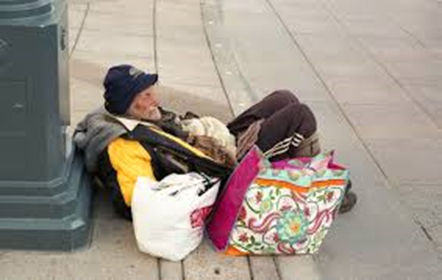
Credit: 2.0 Generic (CC BY 2.0)
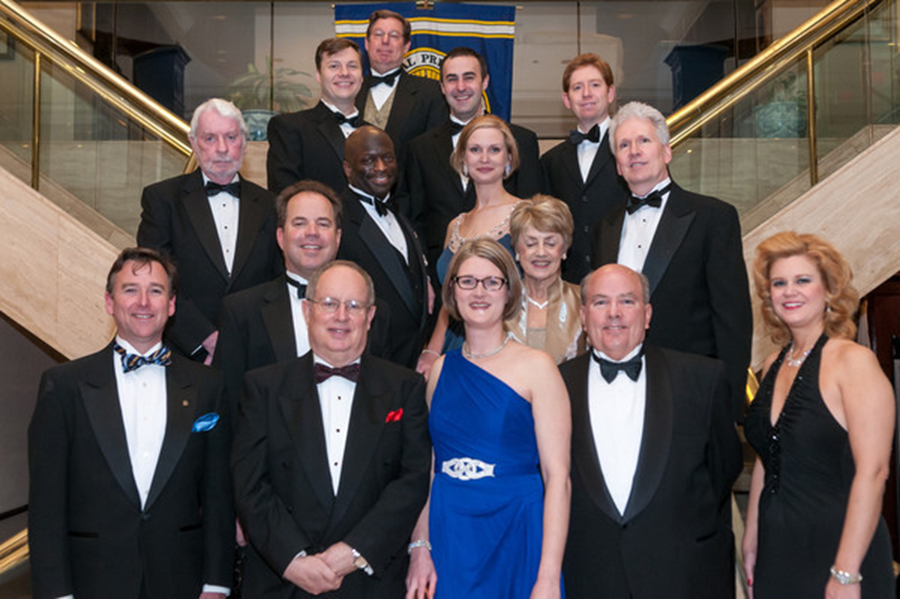
Credit: Author’s personal collection
Physical Environment
The physical environment in which we work makes a big difference. Consider this lounge at the Indiana Memorial Union in Bloomington, Ind. It’s designed to create a pleasant environment for students to study in. The photos on the wall are of former presidents of the university.
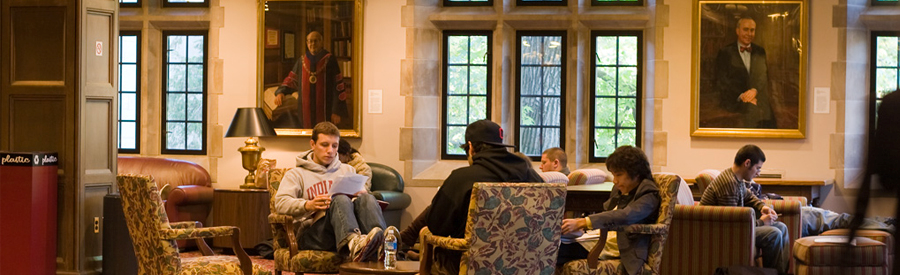
Credit: Indiana University
A trash-littered street reduces property values, drives people away. The one below is in Stockholm.
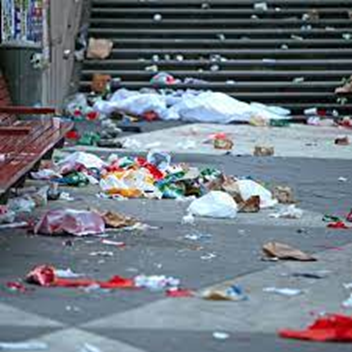
Credit: CC BY 2.0
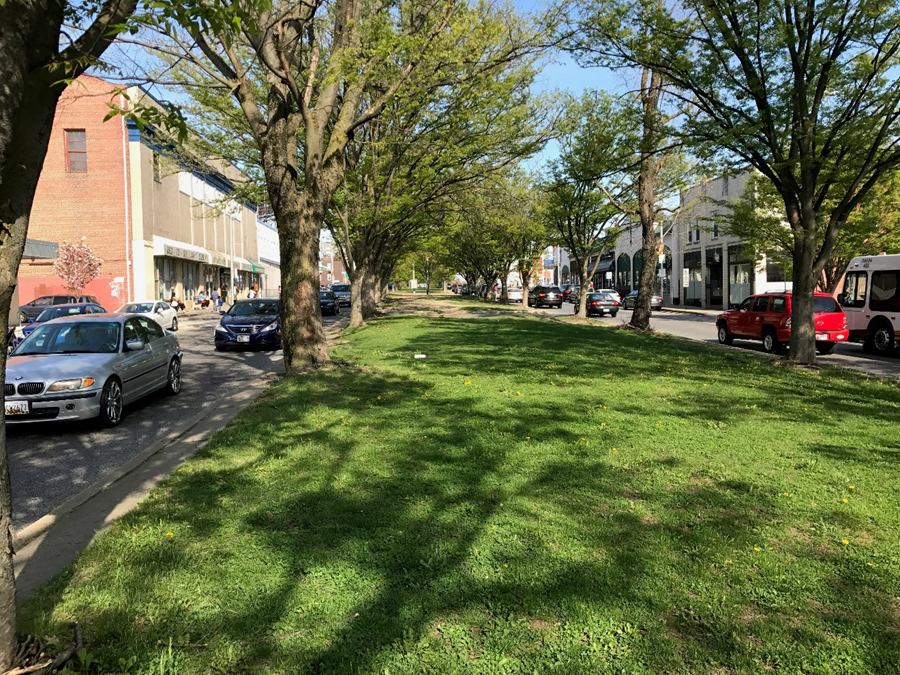
Whereas a clean, tree-lined street creates a pleasant living environment and reduces crime. Shown below is the 33rd Street median parkway in Baltimore, Md.
Credit: CC0 1.0 Universal (CC0 1.0)
Proxemics
Proxemics is the study of how space and distance influence communication. Space influences how people communicate and behave. On a subway car at rush hour we might say we are “packed like sardines.” In a different situation, we might say we are “close” to someone, meaning we are content with and attracted to him or her. If we lose contact with someone, he is “distant.”
We all have definitions of our “personal space,” and these definitions are contextual, as illustrated by the subway illustration. Scholars have identified four zones for Americans which are intimate space (19” to 1.5 feet), personal space, (1.5-4 feet) social space (4-12 feet) and public space, 12-? Feet).
- In a face-to-face class, be prepared to describe the interaction that takes place in each of the above spaces. In an online class, submit a brief paper describing the interaction that takes place in each space.
References
Gueguen, N. and Jacon, C., 2005. The effect of touch on tipping: An evaluation in a French bar. International Journal of Hospitality Management 24(2): 295-299. Doi: 10.1016/j.ijhm.2004.06.004
Hans, A. and Hans, E. (2015). Kinesics, haptics and proxemics: Aspects of non-verbal communication. IOSR Journal of Humanities and Social Sciences (IOSR-JHSS) 20(2): 47-52. http://www.imagochrististudio.org/wp...H020244752.pdf