Social Sci LibreTexts

12.3: Prejudice and Discrimination

  • Page ID
    352688
    • Rose M. Spielman, William J. Jenkins, Marilyn D. Lovett, et al.
    • OpenStax

    \( \newcommand{\vecs}[1]{\overset { \scriptstyle \rightharpoonup} {\mathbf{#1}} } \)

    \( \newcommand{\vecd}[1]{\overset{-\!-\!\rightharpoonup}{\vphantom{a}\smash {#1}}} \)

    \( \newcommand{\dsum}{\displaystyle\sum\limits} \)

    \( \newcommand{\dint}{\displaystyle\int\limits} \)

    \( \newcommand{\dlim}{\displaystyle\lim\limits} \)

    \( \newcommand{\id}{\mathrm{id}}\) \( \newcommand{\Span}{\mathrm{span}}\)

    ( \newcommand{\kernel}{\mathrm{null}\,}\) \( \newcommand{\range}{\mathrm{range}\,}\)

    \( \newcommand{\RealPart}{\mathrm{Re}}\) \( \newcommand{\ImaginaryPart}{\mathrm{Im}}\)

    \( \newcommand{\Argument}{\mathrm{Arg}}\) \( \newcommand{\norm}[1]{\| #1 \|}\)

    \( \newcommand{\inner}[2]{\langle #1, #2 \rangle}\)

    \( \newcommand{\Span}{\mathrm{span}}\)

    \( \newcommand{\id}{\mathrm{id}}\)

    \( \newcommand{\Span}{\mathrm{span}}\)

    \( \newcommand{\kernel}{\mathrm{null}\,}\)

    \( \newcommand{\range}{\mathrm{range}\,}\)

    \( \newcommand{\RealPart}{\mathrm{Re}}\)

    \( \newcommand{\ImaginaryPart}{\mathrm{Im}}\)

    \( \newcommand{\Argument}{\mathrm{Arg}}\)

    \( \newcommand{\norm}[1]{\| #1 \|}\)

    \( \newcommand{\inner}[2]{\langle #1, #2 \rangle}\)

    \( \newcommand{\Span}{\mathrm{span}}\) \( \newcommand{\AA}{\unicode[.8,0]{x212B}}\)

    \( \newcommand{\vectorA}[1]{\vec{#1}}      % arrow\)

    \( \newcommand{\vectorAt}[1]{\vec{\text{#1}}}      % arrow\)

    \( \newcommand{\vectorB}[1]{\overset { \scriptstyle \rightharpoonup} {\mathbf{#1}} } \)

    \( \newcommand{\vectorC}[1]{\textbf{#1}} \)

    \( \newcommand{\vectorD}[1]{\overrightarrow{#1}} \)

    \( \newcommand{\vectorDt}[1]{\overrightarrow{\text{#1}}} \)

    \( \newcommand{\vectE}[1]{\overset{-\!-\!\rightharpoonup}{\vphantom{a}\smash{\mathbf {#1}}}} \)

    \( \newcommand{\vecs}[1]{\overset { \scriptstyle \rightharpoonup} {\mathbf{#1}} } \)

    \(\newcommand{\longvect}{\overrightarrow}\)

    \( \newcommand{\vecd}[1]{\overset{-\!-\!\rightharpoonup}{\vphantom{a}\smash {#1}}} \)

    \(\newcommand{\ket}[1]{\left| #1 \right>}\)
    \(\newcommand{\bra}[1]{\left< #1 \right|}\)
    \(\newcommand{\braket}[2]{\left< #1 \vphantom{#2} \right| \left. #2 \vphantom{#1} \right>}\)
    \(\newcommand{\braopket}[3]{\left< #1 \vphantom{#2}\vphantom{#3} \right| #2 \vphantom{#1}\vphantom{#3} \left| #3 \vphantom{#1}\vphantom{#2} \right>}\)
    \(\newcommand{\qmvec}[1]{\mathbf{\vec{#1}}}\)
    \(\newcommand{\op}[1]{\hat{\mathbf{#1}}}\)
    \(\newcommand{\expect}[1]{\langle #1 \rangle}\)
    \(\newcommand{\dfn}[1]{\emph{\textbf{#1}}}\)

    \(\newcommand{\avec}{\mathbf a}\) \(\newcommand{\bvec}{\mathbf b}\) \(\newcommand{\cvec}{\mathbf c}\) \(\newcommand{\dvec}{\mathbf d}\) \(\newcommand{\dtil}{\widetilde{\mathbf d}}\) \(\newcommand{\evec}{\mathbf e}\) \(\newcommand{\fvec}{\mathbf f}\) \(\newcommand{\nvec}{\mathbf n}\) \(\newcommand{\pvec}{\mathbf p}\) \(\newcommand{\qvec}{\mathbf q}\) \(\newcommand{\svec}{\mathbf s}\) \(\newcommand{\tvec}{\mathbf t}\) \(\newcommand{\uvec}{\mathbf u}\) \(\newcommand{\vvec}{\mathbf v}\) \(\newcommand{\wvec}{\mathbf w}\) \(\newcommand{\xvec}{\mathbf x}\) \(\newcommand{\yvec}{\mathbf y}\) \(\newcommand{\zvec}{\mathbf z}\) \(\newcommand{\rvec}{\mathbf r}\) \(\newcommand{\mvec}{\mathbf m}\) \(\newcommand{\zerovec}{\mathbf 0}\) \(\newcommand{\onevec}{\mathbf 1}\) \(\newcommand{\real}{\mathbb R}\) \(\newcommand{\twovec}[2]{\left[\begin{array}{r}#1 \\ #2 \end{array}\right]}\) \(\newcommand{\ctwovec}[2]{\left[\begin{array}{c}#1 \\ #2 \end{array}\right]}\) \(\newcommand{\threevec}[3]{\left[\begin{array}{r}#1 \\ #2 \\ #3 \end{array}\right]}\) \(\newcommand{\cthreevec}[3]{\left[\begin{array}{c}#1 \\ #2 \\ #3 \end{array}\right]}\) \(\newcommand{\fourvec}[4]{\left[\begin{array}{r}#1 \\ #2 \\ #3 \\ #4 \end{array}\right]}\) \(\newcommand{\cfourvec}[4]{\left[\begin{array}{c}#1 \\ #2 \\ #3 \\ #4 \end{array}\right]}\) \(\newcommand{\fivevec}[5]{\left[\begin{array}{r}#1 \\ #2 \\ #3 \\ #4 \\ #5 \\ \end{array}\right]}\) \(\newcommand{\cfivevec}[5]{\left[\begin{array}{c}#1 \\ #2 \\ #3 \\ #4 \\ #5 \\ \end{array}\right]}\) \(\newcommand{\mattwo}[4]{\left[\begin{array}{rr}#1 \amp #2 \\ #3 \amp #4 \\ \end{array}\right]}\) \(\newcommand{\laspan}[1]{\text{Span}\{#1\}}\) \(\newcommand{\bcal}{\cal B}\) \(\newcommand{\ccal}{\cal C}\) \(\newcommand{\scal}{\cal S}\) \(\newcommand{\wcal}{\cal W}\) \(\newcommand{\ecal}{\cal E}\) \(\newcommand{\coords}[2]{\left\{#1\right\}_{#2}}\) \(\newcommand{\gray}[1]{\color{gray}{#1}}\) \(\newcommand{\lgray}[1]{\color{lightgray}{#1}}\) \(\newcommand{\rank}{\operatorname{rank}}\) \(\newcommand{\row}{\text{Row}}\) \(\newcommand{\col}{\text{Col}}\) \(\renewcommand{\row}{\text{Row}}\) \(\newcommand{\nul}{\text{Nul}}\) \(\newcommand{\var}{\text{Var}}\) \(\newcommand{\corr}{\text{corr}}\) \(\newcommand{\len}[1]{\left|#1\right|}\) \(\newcommand{\bbar}{\overline{\bvec}}\) \(\newcommand{\bhat}{\widehat{\bvec}}\) \(\newcommand{\bperp}{\bvec^\perp}\) \(\newcommand{\xhat}{\widehat{\xvec}}\) \(\newcommand{\vhat}{\widehat{\vvec}}\) \(\newcommand{\uhat}{\widehat{\uvec}}\) \(\newcommand{\what}{\widehat{\wvec}}\) \(\newcommand{\Sighat}{\widehat{\Sigma}}\) \(\newcommand{\lt}{<}\) \(\newcommand{\gt}{>}\) \(\newcommand{\amp}{&}\) \(\definecolor{fillinmathshade}{gray}{0.9}\)
     

    Human conflict can result in crime, war, and mass murder, such as genocide. Prejudice and discrimination often are root causes of human conflict, which explains how strangers come to hate one another to the extreme of causing others harm. Prejudice and discrimination affect everyone. In this section we will examine the definitions of prejudice and discrimination, examples of these concepts, and causes of these biases.

    Figure 12.21 Prejudice and discrimination occur across the globe. (a) A 1939 sign in German-occupied Poland warns “No Entrance for Poles!” (b) An African-American male drinks from a designated “colored” water fountain in Oklahoma in 1939 during the era of racial segregation as a practice of discrimination. (c) A member of the Westboro Baptist Church, widely identified as a hate group, engages in discrimination based on religion and sexual orientation. (credit b: modification of work by United States Farm Security Administration; credit c: modification of work by “JCWilmore”/Wikimedia Commons)

    Understanding Prejudice, Stereotyping, and Discrimination

    As we discussed in the opening story of Trayvon Martin, humans are very diverse and although we share many similarities, we also have many differences. The social groups we belong to help form our identities (Tajfel, 1974). These differences may be difficult for some people to reconcile, which may lead to prejudice toward people who are different. Prejudice is a negative attitude and feeling toward an individual based solely on one’s membership in a particular social group (Allport, 1954; Brown, 2010). Prejudice is common against people who are members of an unfamiliar cultural group. Thus, certain types of education, contact, interactions, and building relationships with members of different cultural groups can reduce the tendency toward prejudice. In fact, simply imagining interacting with members of different cultural groups might affect prejudice. Indeed, when experimental participants were asked to imagine themselves positively interacting with someone from a different group, this led to an increased positive attitude toward the other group and an increase in positive traits associated with the other group. Furthermore, imagined social interaction can reduce anxiety associated with inter-group interactions (Crisp & Turner, 2009). What are some examples of social groups that you belong to that contribute to your identity? Social groups can include gender, race, ethnicity, nationality, social class, religion, sexual orientation, profession, and many more. And, as is true for social roles, you can simultaneously be a member of more than one social group. An example of prejudice is having a negative attitude toward people who are not born in the United States. Although people holding this prejudiced attitude do not know all people who were not born in the United States, they dislike them due to their status as foreigners.

    Can you think of a prejudiced attitude you have held toward a group of people? How did your prejudice develop? Prejudice often begins in the form of a stereotype—that is, a specific belief or assumption about individuals based solely on their membership in a group, regardless of their individual characteristics. Stereotypes become overgeneralized and applied to all members of a group. For example, someone holding prejudiced attitudes toward older adults, may believe that older adults are slow and incompetent (Cuddy, Norton, & Fiske, 2005; Nelson, 2004). We cannot possibly know each individual person of advanced age to know that all older adults are slow and incompetent. Therefore, this negative belief is overgeneralized to all members of the group, even though many of the individual group members may in fact be spry and intelligent.

    Another example of a well-known stereotype involves beliefs about racial differences among athletes. As Hodge, Burden, Robinson, and Bennett (2008) point out, Black male athletes are often believed to be more athletic, yet less intelligent, than their White male counterparts. These beliefs persist despite a number of high profile examples to the contrary. Sadly, such beliefs often influence how these athletes are treated by others and how they view themselves and their own capabilities. Whether or not you agree with a stereotype, stereotypes are generally well-known within in a given culture (Devine, 1989).

    Sometimes people will act on their prejudiced attitudes toward a group of people, and this behavior is known as discrimination. Discrimination is negative action toward an individual as a result of one’s membership in a particular group (Allport, 1954; Dovidio & Gaertner, 2004). As a result of holding negative beliefs (stereotypes) and negative attitudes (prejudice) about a particular group, people often treat the target of prejudice poorly, such as excluding older adults from their circle of friends. The Table 12.3 below summarizes the characteristics of stereotypes, prejudice, and discrimination. Have you ever been the target of discrimination? If so, how did this negative treatment make you feel?

    Table 12.3 Connecting Stereotypes, Prejudice, and Discrimination
    Item Function Connection Example
    Stereotype Cognitive; thoughts about people Overgeneralized beliefs about people may lead to prejudice. “Yankees fans are arrogant and obnoxious.”
    Prejudice Affective; feelings about people, both positive and negative Feelings may influence treatment of others, leading to discrimination. “I hate Yankees fans; they make me angry.”
    Discrimination Behavior; positive or negative treatment of others Holding stereotypes and harboring prejudice may lead to excluding, avoiding, and biased treatment of group members. “I would never hire nor become friends with a person if I knew he or she were a Yankees fan.”

    So far, we’ve discussed stereotypes, prejudice, and discrimination as negative thoughts, feelings, and behaviors because these are typically the most problematic. However, it is important to also point out that people can hold positive thoughts, feelings, and behaviors toward individuals based on group membership; for example, they would show preferential treatment for people who are like themselves—that is, who share the same gender, race, or favorite sports team.

    Link to Learning

    Watch this video of a social experiment conducted in a park(opens in new window) that demonstrates the concepts of prejudice, stereotypes, and discrimination. In the video, three people try to steal a bike out in the open. The race and gender of the thief is varied: a White male teenager, a Black male teenager, and a White female. Does anyone try to stop them? The treatment of the teenagers in the video demonstrates the concept of racism.

    IN-Groups and OUT-Groups

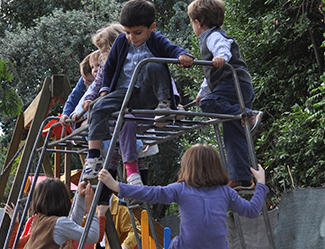
    As discussed previously in this section, we all belong to a gender, race, age, and social economic group. These groups provide a powerful source of our identity and self-esteem (Tajfel & Turner, 1979). These groups serve as our in-groups. An in-group is a group that we identify with or see ourselves as belonging to. A group that we don’t belong to, or an out-group, is a group that we view as fundamentally different from us. For example, if you are a woman, your gender in-group includes all women, and your gender out-group includes all men (See figure 12.23). People often view gender groups as being fundamentally different from each other in personality traits, characteristics, social roles, and interests. Because we often feel a strong sense of belonging and emotional connection to our in-groups, we develop in-group bias: a preference for our own group over other groups. This in-group bias can result in prejudice and discrimination because the out-group is perceived as different and is less preferred than our in-group.

    A photograph shows children climbing on playground equipment.
    Figure 12.23 These children are very young, but they are already aware of their gender in-group and out-group. (credit: modification of work by Simone Ramella)

    Despite the group dynamics that seem only to push groups toward conflict, there are forces that promote reconciliation between groups: the expression of empathy, of acknowledgment of past suffering on both sides, and the halt of destructive behaviors.

    One function of prejudice is to help us feel good about ourselves and maintain a positive self-concept. This need to feel good about ourselves extends to our in-groups: We want to feel good and protect our in-groups. We seek to resolve threats individually and at the in-group level. This often happens by blaming an out-group for the problem. Scapegoating is the act of blaming an out-group when the in-group experiences frustration or is blocked from obtaining a goal (Allport, 1954).


    Why Does Prejudice Continue to Exist and Can It Be Reduced?

    Prejudice and discrimination persist in society due to social learning and conformity to social norms. Children learn prejudiced attitudes and beliefs from society: their parents, teachers, friends, the media, and other sources of socialization, such as Facebook (O’Keeffe & Clarke-Pearson, 2011). If certain types of prejudice and discrimination are acceptable in a society, there may be normative pressures to conform and share those prejudiced beliefs, attitudes, and behaviors. For example, public and private schools are still somewhat segregated by social class. Historically, only children from wealthy families could afford to attend private schools, whereas children from middle- and low-income families typically attended public schools. If a child from a low-income family received a merit scholarship to attend a private school, how might the child be treated by classmates? Can you recall a time when you held prejudiced attitudes or beliefs or acted in a discriminatory manner because your group of friends expected you to?

    In addition, we use our stereotypes and prejudices in part because they are easy; if we can quickly size up people on the basis of their physical appearance, that can save us a lot of time and effort. We may be evolutionarily disposed to stereotyping. Because our primitive ancestors needed to accurately separate members of their own kin group from those of others, categorizing people into “us” (the ingroup) and “them” (the outgroup) was useful and even necessary (Neuberg, Kenrick, & Schaller, 2010). And the positive emotions that we experience as a result of our group memberships—known as social identity—can be an important and positive part of our everyday experiences (Hogg, 2003). We may gain social identity as members of our university, our sports teams, our religious and racial groups, and many other groups.

    image06-1024x683.jpg

    Figure : Social identity is the positive emotions that we experience as a member of an important social group. Caitlin Regan – Who is number 14? – CC BY 2.0

    But the fact that we may use our stereotypes does not mean that we should use them. Stereotypes, prejudice, and discrimination, whether they are consciously or unconsciously applied, make it difficult for some people to effectively contribute to society and may create both mental and physical health problems for them (Swim & Stangor, 1998). In some cases getting beyond our prejudices is required by law, as detailed in the U.S. Civil Rights Act of 1964, the Equal Opportunity Employment Act of 1972, and the Fair Housing Act of 1978.

    There are individual differences in prejudice, such that some people are more likely to try to control and confront their stereotypes and prejudices whereas others apply them more freely (Czopp, Monteith, & Mark, 2006; Plant & Devine, 1998). For instance, some people believe in group hierarchies—that some groups are naturally better than others—whereas other people are more egalitarian and hold fewer prejudices (Sidanius & Pratto, 1999; Stangor & Leary, 2006).

    Social psychologists believe that we should work to get past our prejudices. The tendency to hold stereotypes and prejudices and to act on them can be reduced, for instance, through positive interactions and friendships with members of other groups, through practice in avoiding using them, and through education (Hewstone, 1996).


    References

    Hewstone, M. (1996). Contact and categorization: Social psychological interventions to change intergroup relations. In C. N. Macrae, C. Stangor, & M. Hewstone (Eds.), Stereotypes and stereotyping (pp. 323–368). New York, NY: Guilford Press.

    Hogg, M. A. (2003). Social identity. In M. R. Leary & J. P. Tangney (Eds.), Handbook of self and identity (pp. 462–479). New York, NY: Guilford Press.

    Neuberg, S. L., Kenrick, D. T., & Schaller, M. (2010). Evolutionary social psychology. In S. T. Fiske, D. T. Gilbert, & G. Lindzey (Eds.), Handbook of social psychology (5th ed., Vol. 2, pp. 761–796). Hoboken, NJ: John Wiley & Sons.

    Sidanius, J., & Pratto, F. (1999). Social dominance: An intergroup theory of social hierarchy and oppression. New York, NY: Cambridge University Press.

    Stangor, C., & Leary, S. (2006). Intergroup beliefs: Investigations from the social side. Advances in Experimental Social Psychology, 38, 243–283.

    Swim, J. T., & Stangor, C. (1998). Prejudice: The target’s perspective. Santa Barbara, CA: Academic Press.


    This page titled 12.3: Prejudice and Discrimination was last modified on Wed, 01 Jul 2026 22:20:46 GMT and is shared under a CC BY 4.0 license and was authored, remixed, and/or curated by Rose M. Spielman, William J. Jenkins, Marilyn D. Lovett, et al. (OpenStax) via source content that was edited to the style and standards of the LibreTexts platform.