Social Sci LibreTexts

3.4: Community-Political Sector Stories

  • Page ID
    341244
  • \( \newcommand{\vecs}[1]{\overset { \scriptstyle \rightharpoonup} {\mathbf{#1}} } \)

    \( \newcommand{\vecd}[1]{\overset{-\!-\!\rightharpoonup}{\vphantom{a}\smash {#1}}} \)

    \( \newcommand{\dsum}{\displaystyle\sum\limits} \)

    \( \newcommand{\dint}{\displaystyle\int\limits} \)

    \( \newcommand{\dlim}{\displaystyle\lim\limits} \)

    \( \newcommand{\id}{\mathrm{id}}\) \( \newcommand{\Span}{\mathrm{span}}\)

    ( \newcommand{\kernel}{\mathrm{null}\,}\) \( \newcommand{\range}{\mathrm{range}\,}\)

    \( \newcommand{\RealPart}{\mathrm{Re}}\) \( \newcommand{\ImaginaryPart}{\mathrm{Im}}\)

    \( \newcommand{\Argument}{\mathrm{Arg}}\) \( \newcommand{\norm}[1]{\| #1 \|}\)

    \( \newcommand{\inner}[2]{\langle #1, #2 \rangle}\)

    \( \newcommand{\Span}{\mathrm{span}}\)

    \( \newcommand{\id}{\mathrm{id}}\)

    \( \newcommand{\Span}{\mathrm{span}}\)

    \( \newcommand{\kernel}{\mathrm{null}\,}\)

    \( \newcommand{\range}{\mathrm{range}\,}\)

    \( \newcommand{\RealPart}{\mathrm{Re}}\)

    \( \newcommand{\ImaginaryPart}{\mathrm{Im}}\)

    \( \newcommand{\Argument}{\mathrm{Arg}}\)

    \( \newcommand{\norm}[1]{\| #1 \|}\)

    \( \newcommand{\inner}[2]{\langle #1, #2 \rangle}\)

    \( \newcommand{\Span}{\mathrm{span}}\) \( \newcommand{\AA}{\unicode[.8,0]{x212B}}\)

    \( \newcommand{\vectorA}[1]{\vec{#1}}      % arrow\)

    \( \newcommand{\vectorAt}[1]{\vec{\text{#1}}}      % arrow\)

    \( \newcommand{\vectorB}[1]{\overset { \scriptstyle \rightharpoonup} {\mathbf{#1}} } \)

    \( \newcommand{\vectorC}[1]{\textbf{#1}} \)

    \( \newcommand{\vectorD}[1]{\overrightarrow{#1}} \)

    \( \newcommand{\vectorDt}[1]{\overrightarrow{\text{#1}}} \)

    \( \newcommand{\vectE}[1]{\overset{-\!-\!\rightharpoonup}{\vphantom{a}\smash{\mathbf {#1}}}} \)

    \( \newcommand{\vecs}[1]{\overset { \scriptstyle \rightharpoonup} {\mathbf{#1}} } \)

    \(\newcommand{\longvect}{\overrightarrow}\)

    \( \newcommand{\vecd}[1]{\overset{-\!-\!\rightharpoonup}{\vphantom{a}\smash {#1}}} \)

    \(\newcommand{\ket}[1]{\left| #1 \right>}\)
    \(\newcommand{\bra}[1]{\left< #1 \right|}\)
    \(\newcommand{\braket}[2]{\left< #1 \vphantom{#2} \right| \left. #2 \vphantom{#1} \right>}\)
    \(\newcommand{\braopket}[3]{\left< #1 \vphantom{#2}\vphantom{#3} \right| #2 \vphantom{#1}\vphantom{#3} \left| #3 \vphantom{#1}\vphantom{#2} \right>}\)
    \(\newcommand{\qmvec}[1]{\mathbf{\vec{#1}}}\)
    \(\newcommand{\op}[1]{\hat{\mathbf{#1}}}\)
    \(\newcommand{\expect}[1]{\langle #1 \rangle}\)
    \(\newcommand{\dfn}[1]{\emph{\textbf{#1}}}\)

    \(\newcommand{\avec}{\mathbf a}\) \(\newcommand{\bvec}{\mathbf b}\) \(\newcommand{\cvec}{\mathbf c}\) \(\newcommand{\dvec}{\mathbf d}\) \(\newcommand{\dtil}{\widetilde{\mathbf d}}\) \(\newcommand{\evec}{\mathbf e}\) \(\newcommand{\fvec}{\mathbf f}\) \(\newcommand{\nvec}{\mathbf n}\) \(\newcommand{\pvec}{\mathbf p}\) \(\newcommand{\qvec}{\mathbf q}\) \(\newcommand{\svec}{\mathbf s}\) \(\newcommand{\tvec}{\mathbf t}\) \(\newcommand{\uvec}{\mathbf u}\) \(\newcommand{\vvec}{\mathbf v}\) \(\newcommand{\wvec}{\mathbf w}\) \(\newcommand{\xvec}{\mathbf x}\) \(\newcommand{\yvec}{\mathbf y}\) \(\newcommand{\zvec}{\mathbf z}\) \(\newcommand{\rvec}{\mathbf r}\) \(\newcommand{\mvec}{\mathbf m}\) \(\newcommand{\zerovec}{\mathbf 0}\) \(\newcommand{\onevec}{\mathbf 1}\) \(\newcommand{\real}{\mathbb R}\) \(\newcommand{\twovec}[2]{\left[\begin{array}{r}#1 \\ #2 \end{array}\right]}\) \(\newcommand{\ctwovec}[2]{\left[\begin{array}{c}#1 \\ #2 \end{array}\right]}\) \(\newcommand{\threevec}[3]{\left[\begin{array}{r}#1 \\ #2 \\ #3 \end{array}\right]}\) \(\newcommand{\cthreevec}[3]{\left[\begin{array}{c}#1 \\ #2 \\ #3 \end{array}\right]}\) \(\newcommand{\fourvec}[4]{\left[\begin{array}{r}#1 \\ #2 \\ #3 \\ #4 \end{array}\right]}\) \(\newcommand{\cfourvec}[4]{\left[\begin{array}{c}#1 \\ #2 \\ #3 \\ #4 \end{array}\right]}\) \(\newcommand{\fivevec}[5]{\left[\begin{array}{r}#1 \\ #2 \\ #3 \\ #4 \\ #5 \\ \end{array}\right]}\) \(\newcommand{\cfivevec}[5]{\left[\begin{array}{c}#1 \\ #2 \\ #3 \\ #4 \\ #5 \\ \end{array}\right]}\) \(\newcommand{\mattwo}[4]{\left[\begin{array}{rr}#1 \amp #2 \\ #3 \amp #4 \\ \end{array}\right]}\) \(\newcommand{\laspan}[1]{\text{Span}\{#1\}}\) \(\newcommand{\bcal}{\cal B}\) \(\newcommand{\ccal}{\cal C}\) \(\newcommand{\scal}{\cal S}\) \(\newcommand{\wcal}{\cal W}\) \(\newcommand{\ecal}{\cal E}\) \(\newcommand{\coords}[2]{\left\{#1\right\}_{#2}}\) \(\newcommand{\gray}[1]{\color{gray}{#1}}\) \(\newcommand{\lgray}[1]{\color{lightgray}{#1}}\) \(\newcommand{\rank}{\operatorname{rank}}\) \(\newcommand{\row}{\text{Row}}\) \(\newcommand{\col}{\text{Col}}\) \(\renewcommand{\row}{\text{Row}}\) \(\newcommand{\nul}{\text{Nul}}\) \(\newcommand{\var}{\text{Var}}\) \(\newcommand{\corr}{\text{corr}}\) \(\newcommand{\len}[1]{\left|#1\right|}\) \(\newcommand{\bbar}{\overline{\bvec}}\) \(\newcommand{\bhat}{\widehat{\bvec}}\) \(\newcommand{\bperp}{\bvec^\perp}\) \(\newcommand{\xhat}{\widehat{\xvec}}\) \(\newcommand{\vhat}{\widehat{\vvec}}\) \(\newcommand{\uhat}{\widehat{\uvec}}\) \(\newcommand{\what}{\widehat{\wvec}}\) \(\newcommand{\Sighat}{\widehat{\Sigma}}\) \(\newcommand{\lt}{<}\) \(\newcommand{\gt}{>}\) \(\newcommand{\amp}{&}\) \(\definecolor{fillinmathshade}{gray}{0.9}\)

    Consider the following.
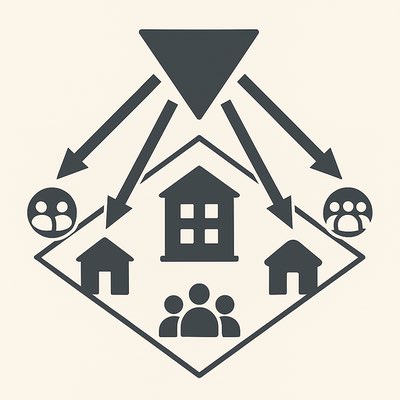
    Abstract illustration showing power distance. POWER DISTANCE (PDI)

    How hierarchy, authority, and leadership expectations shape local political conflict. 

    Somali Refugee Council vs. Minnesota City Board

    Somali community leaders expected elders to speak for the group. City officials insisted on individual public comments. Elders felt disrespected; officials felt the group was “undemocratic.” A hybrid model allowed both elder representation and individual voices.

    Mexican Immigrant Neighborhood & U.S. Police Advisory Committee

    Residents deferred to a single respected community leader. Police expected broad participation. Miscommunication led to mistrust until the committee recognized the leader’s cultural role.

    Filipino Seniors & Canadian Housing Authority

    Seniors refused to challenge authority figures at public hearings. Officials misread silence as agreement. A cultural liaison helped gather private feedback.

    Nigerian Church Coalition & British Local Council

    Church leaders expected formal, hierarchical meetings. Council members used informal, egalitarian discussion. The mismatch caused frustration until meeting formats were clarified.

    Chinese Business Association & Australian Zoning Board

    The association expected decisions to come from senior officials. The board relied on open community voting. Confusion over “who decides” slowed redevelopment plans.

    INDIVIDUALISM vs. COLLECTIVISM (IDV)

    Conflicts around community identity, group loyalty, and civic participation.

    Hmong Community Garden & Midwestern Neighborhood Association

    Hmong families farmed collectively, sharing tools and harvests. The association enforced individual plot ownership. Conflict eased after rules were amended to allow collective plots.

    Korean Immigrant Parents & School Board Elections

    Parents voted as a bloc to support a candidate who represented their community. Other residents accused them of “voting unfairly.” Dialogue revealed differing cultural views on group loyalty vs. individual choice.

    Guatemalan Tenants & Landlord Mediation Program

    Tenants wanted to negotiate as a group. Mediators insisted on individual cases. A group‑based mediation model improved trust and outcomes.

    Pacific Islander Youth Group & City Grant Committee

    Youth wanted to share credit for their project collectively. The committee required a single “project leader.” A compromise allowed co‑leadership roles.

    Indian Neighborhood Association & U.S. Volunteer Corps

    Indian residents expected volunteers to build long‑term relationships. Volunteers rotated frequently, valuing flexibility. Residents felt abandoned; volunteers felt unappreciated. A stable liaison role resolved the tension.

    MASCULINITY vs. FEMININITY (MAS)

    Conflicts around assertiveness, gender roles, competition, and community priorities.

    Japanese Senior Center & Dutch Community Planners

    Japanese elders avoided self‑promotion when applying for community funds. Dutch planners expected assertive proposals. Understated applications were initially rejected until evaluators learned to read indirect communication.

    Middle Eastern Men’s Council & Scandinavian Women’s Collective

    A joint community safety meeting collapsed when men dominated the floor. Women expected equal speaking time and consensus. A facilitator introduced structured turn‑taking.

    U.S. Neighborhood Watch & Swedish Immigrant Residents

    Watch members used aggressive, confrontational language about crime. Swedish residents preferred calm, cooperative approaches. Tension eased after reframing meetings around shared safety goals.

    Brazilian Community Festival Committee & German Event Planners

    Brazilians emphasized expressive celebration and improvisation. Germans emphasized precision and planning. Clashes over scheduling were resolved with a flexible‑but‑structured timeline.

    South African Township Council & Finnish NGO

    Local leaders prioritized economic competition and status. The NGO prioritized equality and social welfare. Joint workshops helped align development goals.

    UNCERTAINTY AVOIDANCE (UAI)

    Conflicts around rules, risk, ambiguity, and community decision‑making.

    Greek Residents & U.S. City Hall on Emergency Preparedness

    Greek residents demanded detailed evacuation plans. City officials provided general guidelines. Residents felt unsafe; officials felt overwhelmed. A more structured plan restored trust.

    Japanese Neighborhood & Kenyan Community Organizers

    Japanese residents wanted strict rules for a shared community center. Kenyan organizers preferred flexible, evolving guidelines. A hybrid rulebook balanced structure and adaptability.

    French Cycling Coalition & Spanish Traffic Committee

    French activists wanted clear, codified bike‑lane rules. Spanish officials preferred informal, case‑by‑case decisions. Misunderstandings slowed implementation until a formal policy was drafted.

    German Environmental Group & American Town Council

    German activists insisted on detailed environmental impact assessments. The council preferred quick approvals. Conflict escalated until a phased review process was adopted.

    Portuguese Neighborhood & British Urban Planners

    Residents wanted predictable, long‑term redevelopment plans. Planners used flexible, iterative design. Residents felt anxious; planners felt constrained. A multi‑year roadmap eased tensions.


    This page titled 3.4: Community-Political Sector Stories was last modified on Mon, 23 Feb 2026 16:32:35 GMT and is shared under a CC BY-NC-ND license and was authored, remixed, and/or curated by Robb Lightfoot.

    • Was this article helpful?