

InfoPage
- Page ID
- 339422
\( \newcommand{\vecs}[1]{\overset { \scriptstyle \rightharpoonup} {\mathbf{#1}} } \)
\( \newcommand{\vecd}[1]{\overset{-\!-\!\rightharpoonup}{\vphantom{a}\smash {#1}}} \)
\( \newcommand{\dsum}{\displaystyle\sum\limits} \)
\( \newcommand{\dint}{\displaystyle\int\limits} \)
\( \newcommand{\dlim}{\displaystyle\lim\limits} \)
\( \newcommand{\id}{\mathrm{id}}\) \( \newcommand{\Span}{\mathrm{span}}\)
( \newcommand{\kernel}{\mathrm{null}\,}\) \( \newcommand{\range}{\mathrm{range}\,}\)
\( \newcommand{\RealPart}{\mathrm{Re}}\) \( \newcommand{\ImaginaryPart}{\mathrm{Im}}\)
\( \newcommand{\Argument}{\mathrm{Arg}}\) \( \newcommand{\norm}[1]{\| #1 \|}\)
\( \newcommand{\inner}[2]{\langle #1, #2 \rangle}\)
\( \newcommand{\Span}{\mathrm{span}}\)
\( \newcommand{\id}{\mathrm{id}}\)
\( \newcommand{\Span}{\mathrm{span}}\)
\( \newcommand{\kernel}{\mathrm{null}\,}\)
\( \newcommand{\range}{\mathrm{range}\,}\)
\( \newcommand{\RealPart}{\mathrm{Re}}\)
\( \newcommand{\ImaginaryPart}{\mathrm{Im}}\)
\( \newcommand{\Argument}{\mathrm{Arg}}\)
\( \newcommand{\norm}[1]{\| #1 \|}\)
\( \newcommand{\inner}[2]{\langle #1, #2 \rangle}\)
\( \newcommand{\Span}{\mathrm{span}}\) \( \newcommand{\AA}{\unicode[.8,0]{x212B}}\)
\( \newcommand{\vectorA}[1]{\vec{#1}} % arrow\)
\( \newcommand{\vectorAt}[1]{\vec{\text{#1}}} % arrow\)
\( \newcommand{\vectorB}[1]{\overset { \scriptstyle \rightharpoonup} {\mathbf{#1}} } \)
\( \newcommand{\vectorC}[1]{\textbf{#1}} \)
\( \newcommand{\vectorD}[1]{\overrightarrow{#1}} \)
\( \newcommand{\vectorDt}[1]{\overrightarrow{\text{#1}}} \)
\( \newcommand{\vectE}[1]{\overset{-\!-\!\rightharpoonup}{\vphantom{a}\smash{\mathbf {#1}}}} \)
\( \newcommand{\vecs}[1]{\overset { \scriptstyle \rightharpoonup} {\mathbf{#1}} } \)
\(\newcommand{\longvect}{\overrightarrow}\)
\( \newcommand{\vecd}[1]{\overset{-\!-\!\rightharpoonup}{\vphantom{a}\smash {#1}}} \)
\(\newcommand{\ket}[1]{\left| #1 \right>}\)
\(\newcommand{\bra}[1]{\left< #1 \right|}\)
\(\newcommand{\braket}[2]{\left< #1 \vphantom{#2} \right| \left. #2 \vphantom{#1} \right>}\)
\(\newcommand{\braopket}[3]{\left< #1 \vphantom{#2}\vphantom{#3} \right| #2 \vphantom{#1}\vphantom{#3} \left| #3 \vphantom{#1}\vphantom{#2} \right>}\)
\(\newcommand{\qmvec}[1]{\mathbf{\vec{#1}}}\)
\(\newcommand{\op}[1]{\hat{\mathbf{#1}}}\)
\(\newcommand{\expect}[1]{\langle #1 \rangle}\)
\(\newcommand{\dfn}[1]{\emph{\textbf{#1}}}\)
This text is disseminated via the Open Education Resource (OER) LibreTexts Project (https://LibreTexts.org) and like the thousands of other texts available within this powerful platform, it is freely available for reading, printing, and "consuming."
The LibreTexts mission is to bring together students, faculty, and scholars in a collaborative effort to provide an accessible, and comprehensive platform that empowers our community to develop, curate, adapt, and adopt openly licensed resources and technologies; through these efforts we can reduce the financial burden borne from traditional educational resource costs, ensuring education is more accessible for students and communities worldwide.
Most, but not all, pages in the library have licenses that may allow individuals to make changes, save, and print this book. Carefully consult the applicable license(s) before pursuing such effects. Instructors can adopt existing LibreTexts texts or Remix them to quickly build course-specific resources to meet the needs of their students. Unlike traditional textbooks, LibreTexts’ web based origins allow powerful integration of advanced features and new technologies to support learning.

LibreTexts is the adaptable, user-friendly non-profit open education resource platform that educators trust for creating, customizing, and sharing accessible, interactive textbooks, adaptive homework, and ancillary materials. We collaborate with individuals and organizations to champion open education initiatives, support institutional publishing programs, drive curriculum development projects, and more.
The LibreTexts libraries are Powered by NICE CXone Expert and were supported by the Department of Education Open Textbook Pilot Project, the California Education Learning Lab, the UC Davis Office of the Provost, the UC Davis Library, the California State University Affordable Learning Solutions Program, and Merlot. This material is based upon work supported by the National Science Foundation under Grant No. 1246120, 1525057, and 1413739.
Any opinions, findings, and conclusions or recommendations expressed in this material are those of the author(s) and do not necessarily reflect the views of the National Science Foundation nor the US Department of Education.
Have questions or comments? For information about adoptions or adaptions contact info@LibreTexts.org or visit our main website at https://LibreTexts.org.
The LibreTexts name, logo, and book covers are trademarked by LibreTexts, Inc. (a 501(c)(3) not-for-profit organization) and protected against unauthorized use.
This text was compiled on 10/23/2026
👋 Welcome to ANTH 220: Introduction to Archaeology
This open textbook was created specifically for this course to support our weekly modules, in-class activities, and learning outcomes.
You do not need to read this book from beginning to end.
Each week in Canvas will guide you to the sections you need.
📖 How to Use This Book
- Start in Canvas
- Open the weekly module
- Read the assigned sections
- Apply your learning in discussions and activities
This structure keeps the workload manageable and connects readings directly to what we are doing in class.
🌍 Why We Are Using an Open Educational Resource
- ✅ No textbook cost
- ✅ Access on the first day of class
- ✅ Works on phone, tablet, or computer
- ✅ You keep it forever
This is part of our commitment to equity, access, and student success in the California Community College system.
🏺 Our Approach to Archaeology
In this course, archaeology is about people, culture, and the present — not just objects from the past.
- Cultural relativity
- Ethical practice
- Descendant and Indigenous communities
- Multiple perspectives
- Archaeology in today’s world
👩🏫 About Your Instructor
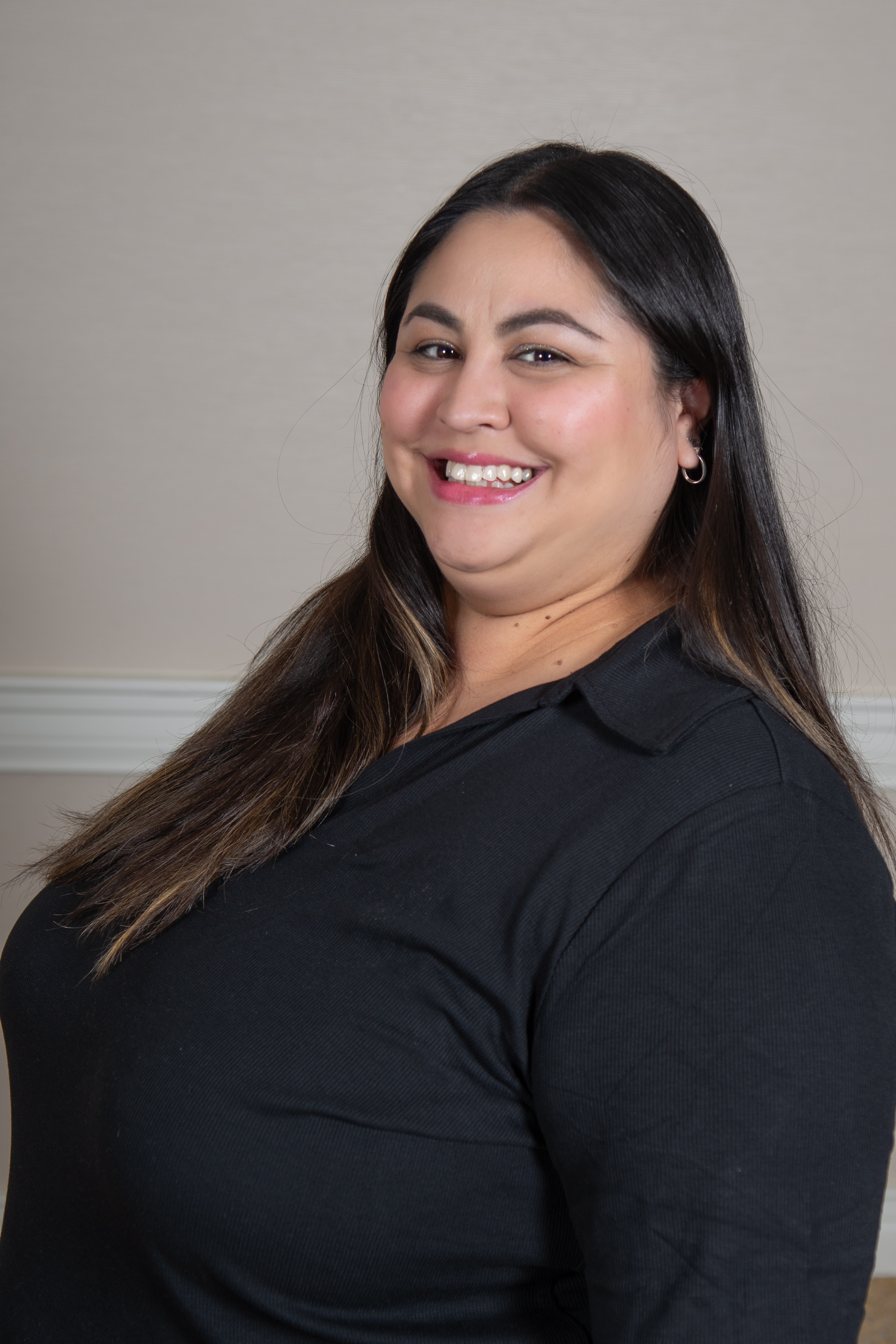
Welcome! I’m Professor Huckabee, and I teach anthropology across the California Community College system. My courses are designed to be supportive, accessible, and student-centered, with clear weekly guidance in Canvas and hands-on learning that connects archaeology to the world around us.
My academic background is in anthropology. I hold a master’s degree in forensic anthropology and am currently a doctoral candidate in educational leadership with an emphasis in community college leadership. In addition to teaching, I serve in faculty leadership at the statewide level, where I work to support equitable and inclusive education for our students.
You do not need prior experience in archaeology to succeed in this course — you belong here, and I am here to support your learning.
🪶 Land Acknowledgment
We acknowledge that Citrus College is located on the traditional and ancestral lands of the Gabrielino-Tongva, who have stewarded this land since time immemorial and continue to do so today.
As students of archaeology and anthropology, this acknowledgment is especially important. The places we study are not empty landscapes or sites of a distant past — they are part of the living cultural heritage of Indigenous and descendant communities.
In this course we recognize:
-
that Indigenous peoples are contemporary communities, not only part of the past
-
that cultural materials are connected to living traditions and identities
-
that archaeological practice carries ethical responsibilities
This acknowledgment is one step toward:
-
centering Indigenous voices and knowledge
-
respecting sovereignty and self-representation
-
approaching the study of the past with care and accountability
🔧 How This Text Was Remixed
This is not a single traditional textbook.
It is a remix of multiple openly licensed archaeology OER resources, reorganized to match the structure of ANTH 220.
- Content selected for this course
- Chapters arranged in the order we learn them
- Language clarified for student success
- Activities and examples added
This is a living text and may continue to improve during the semester.
🌟 You Belong in This Course
You do not need prior experience in archaeology to succeed.
This course is built to support you through:
- Clear weekly structure
- Guided learning
- Hands-on activities
- Collaborative work
- Multiple ways to participate