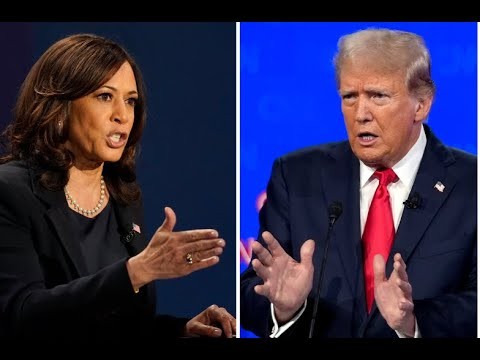
Figure 1. Kamala Harris v Donald Trump debate stances (This photo by Unknown Author is licensed under CC-BY-ND)
Learning Objectives
After reading this chapter, the student will be able to:
- Define argumentation and debate.
- Explain what distinguishes competitive debate from everyday arguments.
- Explain the benefits of taking a course in debate.
- Apply some strategies for dealing with debate anxiety.
Becoming a debater
As a student of Oral Argumentation and Debate, you are joining a long tradition shaped by some of the greatest minds in world history. Debates in their ancient or classical forms facilitated the contributions of prominent figures such as Protagoras of Abdera (considered the “Father of Debate,” 481-411 BC), Aristotle of Greece (384–322 BCE) and Cicero of Rome (106–43 BCE) who all advanced rhetoric as a crucial persuasive tool in education, courts, and assemblies. Protagoras described scholarly debate as a process he called dissoi logoi, which involves publicly airing various perspectives on vexing or complex issues to encourage critical thinking (Mitchell, 2010). During this period, debates served as public demonstrations of logic, credibility, and emotional appeals; significantly influencing the legal and political discourses of their time; and continuing to do so to this day. Socratic questioning emerged in classical Athens around the 5th century BCE. This method, centered on asking questions to expose contradictions and clarify ideas, is attributed to Socrates. While Socrates didn't formally write it down, his methods were preserved through the dialogues of his student Plato, in works like Euthyphro, Apology, and Meno. Such works became foundational to Western philosophy, legal processes, education, and collegiate debating circles.
In more recent history, Frederick Douglass was a leading 19th‑century abolitionist celebrated for his eloquence and steadfast advocacy for freedom and equality. Born into slavery in the early 1800s, he escaped bondage and rose to prominence as a powerful orator, writer, and organizer. His speeches and writings on abolition and civil rights galvanized audiences and continue to resonate today, underscoring his lasting impact on the fight against slavery and racial injustice. One of the most historic debating events in U.S. history is the Lincoln-Douglas debates. The events consisted of a sequence of seven formal debates during the 1858 Illinois campaign for the U.S. Senate seat held by Stephen A. Douglas, with Abraham Lincoln as the Republican challenger. The central subject of the debates was whether slavery should be allowed to expand into western U.S. territories. In each debate one candidate opened with a one‑hour address, the other replied for 90 minutes, then the opener had 30 minutes for rebuttal. The debates drew tens of thousands of spectators and national newspaper attention. They were staged outdoors with lively crowd participation. Douglas argued for popular sovereignty, saying territorial settlers—not Congress—should decide whether to allow slavery. His words were said to spark violent protests in Kansas. During the debates, he also defended the Kansas–Nebraska Act of 1854, which organized Kansas and Nebraska into separate territories. The Kansas‑Nebraska Act attempted a democratic solution to the slavery question, but instead it intensified the crisis, which later progressed into the American Civil War. Lincoln, as an astute challenger, argued that slavery’s expansion must be stopped and famously warned that the nation was a house divided that could not endure half slave and half free. The debates clarified national fault lines over slavery, showcased the power of public debate and the media in U.S. politics, and launched Lincoln from a regional politician to a national leader whose 1860 election helped to reshape the United States.
John F. Kennedy’s televised debates with Nixon in 1960 revolutionized political communication, transforming presidential debates into mass media events that emphasized style as much as substance. Barbara Jordan was a powerful orator and U.S. congresswoman in the 1970s. Her Watergate speech remains one of the most eloquent defenses of constitutional democracy in U.S. history. Margaret Thatcher was widely regarded as a formidable debater, especially in the political arena. Known as the Iron Lady, she combined sharp intellect, unwavering conviction, and strategic rhetoric to dominate debates in British Parliament and on the global stage. Christopher Hitchens (1949–2011) remains a gold standard in debate. He was known for his razor-sharp wit, eloquence, and fearless engagement on religion, ethics, and geopolitics. He once famously debated “Does God Exist?” against William Lane Craig in 2009 at Biola University (click the video link in the picture below to watch the full-length debate).
 Today, we have many contemporary examples of great debaters. Meghan McCain, formerly a co-host of the popular television talk show The View is known for her sharp conservative commentary. She often brought her personal conviction and her political heritage, as the daughter of Senator John McCain, into her arguments. Known to many in the public sphere as AOC, Alexandria Ocasio-Cortez, is a U.S. Congresswoman with a reputation for dismantling opposition with clarity and poise. Her viral speeches and social media presence make her a modern rhetorical force, often appealing to progressive audiences and younger voters. Candace Owens, a conservative news commentator, is known for her fiery debates and contrarian takes. She frequently engages in high-profile discussions on race, politics, and culture, appealing to audiences who value disruption and ideological challenge. She is often bold and unapologetic in her stances.
Debating has undergone significant evolution throughout human history, adapting to shifts in culture, politics, and technology. However, regardless of its era, oral argumentation and debate have consistently had a profound impact on societies, with the potential to launch wars, promote peace, and drive social change.
To become a strong debater, it is essential to develop not only a robust understanding of the principles of argumentation and debate but also to practice critical thinking, active listening, and clear communication. Great debaters can construct persuasive arguments, anticipate counterarguments, and respond thoughtfully under pressure. By engaging in regular practice, seeking and getting feedback, and learning from a variety of debate styles and topics that you will likely be exposed to in the college classroom, students can steadily improve their skills and confidence in oral argumentation and debate.
What is argumentation, and why do we need it?
Argumentation is the process of developing, presenting, and defending claims through logical reasoning and supporting evidence to deliberately persuade others to accept our conclusions or take an action on an issue of collective concern. Argumentation is a foundational skill in academic, professional, and everyday contexts, enabling individuals to communicate ideas, resolve disputes, and make informed decisions. Effective argumentation fosters critical thinking, enhances communication skills, and promotes informed citizenship. It allows participants to consider diverse viewpoints, evaluate evidence objectively, and engage in constructive dialogue. In educational settings, argumentation helps students develop analytical skills and confidence in expressing their ideas. In other words, argumentation involves presenting evidence, analyzing reasoning, and drawing conclusions to persuade others or to clarify concepts. It can be done in writing or orally.
Definition of terms
Argumentation is the process of developing, presenting, and defending claims through logical reasoning and supporting evidence to deliberately persuade others to accept our conclusions or take an action on an issue of collective concern.
Debate is a structured form of argumentation where participants advocate for or against a particular resolution, following specific rules and formats to ensure fairness and clarity.
Debate is a structured form of argumentation where participants advocate for or against a particular resolution, following specific rules and formats to ensure fairness and clarity. In most debates, there is typically a judge or moderator and a public audience. Suppose you watch a political debate, such as the one between former President Joe Biden and President Donald Trump. In that case, you can see how debates over social issues, such as taxes, Medicare, and global conflicts can influence an audience's choice of a particular candidate. These are competitive debates that differ from everyday arguments as time limits and formal rules govern them. In a political debate, the judges are citizens with a vested interest in specific social issues or a desire to support a particular candidate or political party. While casual arguments may occur spontaneously and without structure, competitive debates require participants to prepare cases, anticipate opposing viewpoints, and adjust their strategies in real-time. This structured environment helps debaters develop critical thinking, quick reflexes, and persuasive communication skills.
Enrolling in a debate course offers numerous benefits. Students enhance their public speaking skills, learn to construct logical arguments, and develop the ability to think critically and respond effectively on their feet. As Cripe and Flood (2003) describe it, “debate forces its participants to think, organize, and present, and to do all of them quickly and clearly” (p. 5). These skills not only enhance academic performance but also prepare individuals for effective communication in professional and social settings. In sum, the ability to argue effectively and refute opponents’ claims is crucial for helping students advance their personal and professional goals. Additionally, learning to argue verbally can improve one’s written communication and offer ways to enter public conversations about issues of social and political concern to you and the diverse communities to which you belong.
Managing debate anxiety
It is difficult to think about debate outside of the context of public speaking. Debate is indeed a form of oral communication that most often occurs in the public sphere—having some anxiety about being required to present before an audience is normal. How you manage that increased fear or arousal is more important than the fear itself. Asking yourself, “What is at the root of my fear?” can help you gauge how to tackle your concerns around oral presentations. Is it a fear of failure? Is it a fear of the unknown? Is it fear of being the center of attention? Or is it just a lack of positive experiences with speaking in front of a group that is the cause of your fear? Once you determine the cause, you can work on the solution, which involves managing your fears and completing the presentation anyway. The debate classroom is like a lab where you can try things you’ve never tried before and support other students as they tackle the same challenges.
When it comes to public speaking anxiety, several strategies can be helpful. Practicing speeches with several rehearsals beforehand, out loud, focusing on breathing techniques, and visualizing a successful performance can ease nerves. Additionally, familiarity with the subject matter often increases confidence while exposure to supportive audiences can help reduce anxiety over time. The process of becoming comfortable with public speaking or debate takes time and practice. Techniques such as deep breathing and positive self-talk can help reduce anxiety before and during presentations. Additionally, rehearsing your arguments out loud in front of a mirror or a friend can help familiarize yourself with the debate environment, and seeking constructive feedback from peers or your instructor can build confidence and improve performance. Remember, each speaking experience provides an opportunity to grow and become a more effective communicator.
For students in debate who are not native English speakers, the key is to focus on clarity, preparation, and confidence. Start by mastering the vocabulary and phrases commonly used in debate—terms like assertion, reasoning, and evidence—so you can follow and contribute to arguments more easily. An assertion refers to a major claim advanced by a debater to support their overall position. Each assertion is typically supported by reasoning (an explanation of why the claim is true) and evidence (facts, statistics, examples, or expert testimony that substantiate the reasoning).
In practice, debaters organize their speeches around numbered assertions (e.g., Assertion One: School uniforms improve discipline). This structure helps judges, opponents, and teammates follow the argument flow, track responses, and identify which points have been answered or left unaddressed. During refutation, debaters directly respond to their opponent’s assertions by challenging the claim itself, the reasoning that supports it, or the evidence used to justify it. Understanding how assertions function is essential for constructing organized arguments, taking accurate notes, and engaging in effective rebuttal.
Practice speaking slowly and clearly, emphasizing structure over speed; judges value logical organization more than rapid delivery. Use preparation outlines and cue cards to stay focused and rehearse your speeches aloud to build fluency. Reading high-quality articles and listening to debates in English can help you absorb natural phrasing and improve pronunciation. Don’t be afraid to ask for clarification during cross-examination or to repeat a point if needed. Assertiveness is part of debating. Most importantly, remember that your ideas matter just as much as your accent. With preparation and persistence, you can become a powerful and persuasive speaker, regardless of your first language.
References
Cripe, N. M. & Flood, R. E. (2003). The scholastic debater. Alistair Press.
Mitchell, G. R. (2010). Switch-side debating meets demand-driven rhetoric of science. Rhetoric & Public Affairs, Suppl. Special Issue on Rhetoric and Public Policy, 13(1), 95-120. https://doi.org/10.1353/rap.0.0134
Activity: How argumentative are you?
Argumentativeness Scale Assessment
Indicate how often each statement is true for you by placing the appropriate number in the blank to the left of the statement.
1 = ALMOST NEVER TRUE
2 = RARELY TRUE
3 = OCCASIONALLY TRUE
4 = OFTEN TRUE
5 = ALWAYS TRUE
______ 1. While in an argument, I worry that the person I am arguing with will form a negative opinion of me.
______ 2. Arguing over controversial issues improves my intelligence.
______ 3. I enjoy avoiding arguments.
______ 4. I am energetic and enthusiastic when I argue.
______ 5. Once I finish an argument, I promise myself that I will not get into another.
______ 6. Arguing with a person creates more problems for me than it solves.
______ 7. I have a pleasant, good feeling when I win a point in an argument.
______ 8. When I finish arguing with someone, I feel nervous and upset.
______ 9. I enjoy a good argument over a controversial issue.
______ 10. I get an unpleasant feeling when I realize I am about to get into an argument.
______ 11. I enjoy defending my point of view on an issue.
______ 12. I am happy when I keep an argument from happening.
______ 13. I do not like to miss the opportunity to argue a controversial issue.
______ 14. I prefer being with people who rarely disagree with me.
______ 15. I consider an argument as an exciting intellectual challenge.
______ 16. I find myself unable to think of effective points during an argument.
______ 17. I feel refreshed and satisfied after an argument on a controversial issue.
______ 18. I have the ability to do well in an argument.
______ 19. I try to avoid getting into arguments.
______ 20. I feel excited when I expect that a conversation I am in is leading to an argument.
Scoring the Argumentativeness Scale
Step 1. Add your scores on items: 2, 4, 7, 9, 11, 13, 15, 17, 18, 20.
Step 2. Add 60 to the sum obtained in step 1.
Step 3. Add your scores on items: 1, 3, 5, 6, 8, 10, 12, 14, 16, 19.
Step 4. To compute your argumentativeness score, subtract the total in Step 3 from the total obtained in Step 2.
Interpretation
High in argumentativeness 73–100
Moderate in argumentativeness 56–72
Low in argumentativeness 20–55