Describe how religion relates to identity in Israel and Iran.
Introduction
As a reminder from Chapter 2, one methodological approach used in comparative politics is the Most Different Systems Design (MSSD). This approach examines cases that are quite different from one another, yet have the same outcome. Because the dependent variable is the same across cases in a MSSD, researchers aim to answer: Why do different systems produce the same outcome?
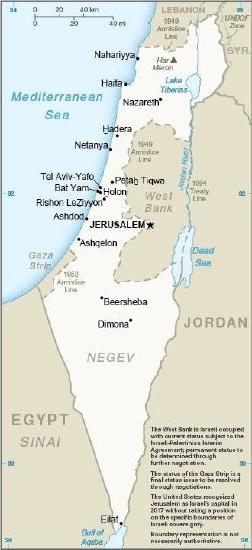
When examining the cases of Iran and Israel, the dependent variable of interest is a set of political outcomes that favor religion. In Iran, the religion is Shi'a Islam; in Israel, the religion is Judaism. Though the religions themselves differ, they dominate in each state in similar ways. First, the legal codes in each state favor their respective religion (Stern, 2017; Pargoo, 2021), and the judicial system in each state includes religious courts. Second, each religious group has economic access and favorable economic treatment. Third, each state provides favorable treatment for religious students and religious education. Fourth, each religion enjoys political representation, and each state has religious political parties or factions within its political system. Across these two cases, we observe similar outcomes.
Yet despite similar observations on the dependent variable, the two cases differ in potential independent (explanatory) variables. Israel is a democratic regime while Iran is a non-democratic regime (Marshall & Elzinger-Marshall, 2017). Israel has a liberal market economy while Iran has a non-market (or emerging market) economy. Israel ranks higher than Iran on socioeconomic indicators, with Israel ranking 27th and Iran ranking 75th out of 193 states and territories in the United Nations Development Programme's 2025 Human Development Report. While Israel and Iran each have a mix of secular and religious authority, Israel today has a more secular orientation than Iran. Finally, Israel maintains much closer relationships with the West than Iran, shown particularly through annual direct military and economic support sent to Israel from the United States.
Religion and nationalism play a central role in the identity of most Israelis. Most Israelis identify as Jewish. Strongly related to this is the concept of Zionism. Zionism is the ideological drive for an independent Jewish state. This political movement has its roots in the late 1800s, when Jewish minorities faced severe oppression in Europe, particularly in the Russian Empire. This pressure, combined with a British takeover of the former Ottoman region of Palestine, led to a series of aliyahs, or migrations. As the situation for Jewish minorities worsened in Europe, these migrations took on more urgency. Ultimately, conflict erupted between the migrated groups and the Arab population that had existed there for centuries. Unable to maintain military power, the British vacated Palestine, with Jewish groups uniting to declare independence in 1948.
The independence of the State of Israel cemented the importance of a Jewish identity. Israel is a state explicitly created as a homeland for the Jewish people. Jewish identity in Israel takes two forms: a cultural Jewish identity and a religious Jewish identity. Quite a few Israeli citizens, and to a larger extent Jewish people in other countries, identify as culturally Jewish. For these folks, being Jewish is a matter of ancestry and culture, and not necessarily religious practice, which can vary from a complete lack of participation to observation of major holidays. While these people belong, they may not necessarily believe or behave. Religious Jews are much more likely to incorporate religious belief and practice into their daily lives; they believe, behave, and belong, which explains their strong bonding.
Israeli political identity is also informed by a focus on maintaining a Westphalian vision of sovereignty. This can be traced to the creation in 1947, by the United Nations (UN), of a partition plan where the Jewish and Arab groups would be divided into two states (Heaphy, 2021). This decision to give the Jewish people a homeland was largely a reaction to the genocide of Jews in the Holocaust during World War II. The creation of the State of Israel led almost immediately to war. The initial war in the aftermath of the creation of Israel, as well as subsequent conflicts, led to significant expansion of territory claimed by Israel that Palestinians (and other Arabs) consider to be their own territory. Maintaining control over territory granted by the UN and gained in war, therefore, is a key driver of political identity for Israeli Jews.
Religion also plays a central role for those who feel left out of Israeli politics. Ultra-Orthodox Jews "reject Jewish nationalism as they perceive Jews as a religious group that should not be politically sovereign" until the end of times for humankind. Arab Israelis "oppose the exclusive Jewish elements" promoted by the state.
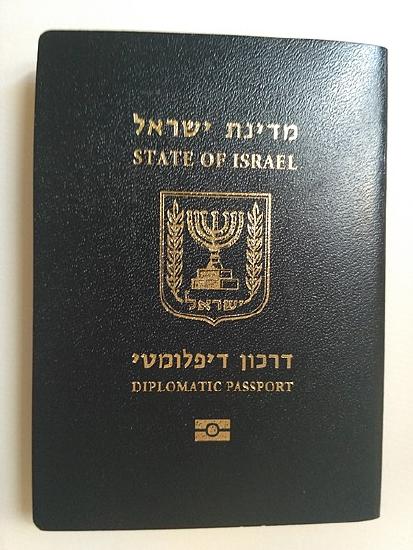
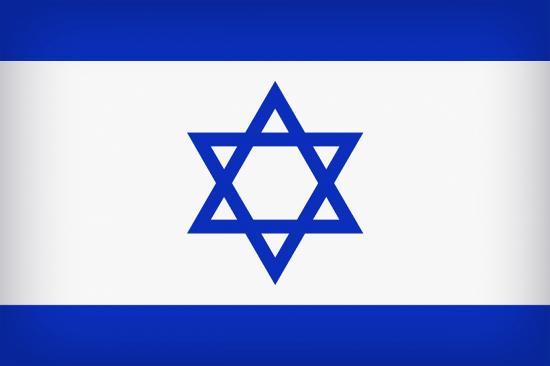
The importance of religion in Israeli identity is seen in the religious imagery on the Israeli passport and flag.
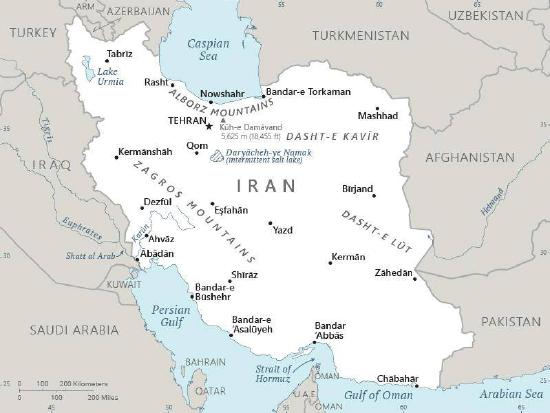
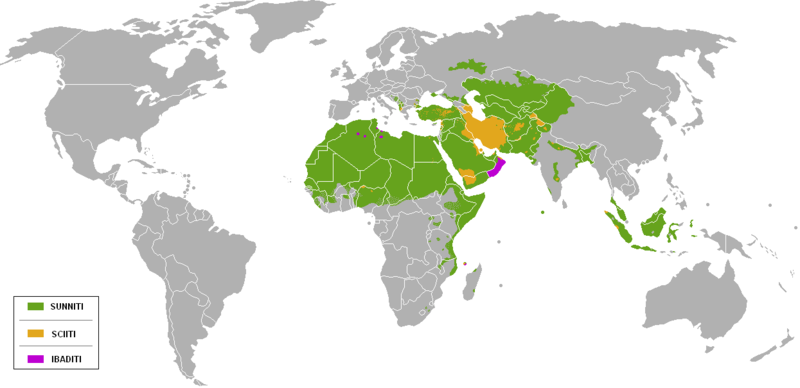
Religion and religious identity also play a major role in Iran. Iran is located geographically in the Middle East, with Farsi as its dominant language and Islam as its dominant religion. The majority of Muslims in Iran, approximately 90-95 percent, identify as Shi’a.
Shi'ism is a branch of Islam, encompassing approximately 10-13 percent of the total global Muslim population. The vast majority of Muslims worldwide are Sunni Muslims. Shi'ites believe that, after the Prophet Muhammad's death (in 632 CE), leadership of the umma, or religious community, should have passed to Ali ibn Ali Talib. Instead, Abu Bakr became the Prophet Muhammad's successor, the first caliph. Ali eventually became caliph 20 years later, but was assassinated approximately five years after that. His son, Husayn ibn Ali, subsequently took up his father’s cause until he was killed at the Battle of Karbala (680 CE). For Shi'a Muslims, Husayn's martyrdom is a major event that is commemorated yearly through a day of mourning (Ashura).
This very brief glimpse into history provides a foundation for understanding Iranian politics today. While Sunni Muslims bask in the glory of previous empires, Shi'a Muslims instead see a history of oppression and mistreatment, and Husayn's martyrdom provided a rallying cry for Shi'a during years of subjugation under Sunni Muslim rulers. The 1979 Iranian Revolution, which brought religious Shi'a to power in Iran, is seen as a culmination of this struggle.
The 1979 Iranian Revolution is a watershed moment in history, driven by a series of factors. First, the Shah, or King of Iran, promoted a strongly secular state, where Shi'a clergy were persecuted and Islamic holidays were minimized. The Shah promoted an Iranian identity uncoupled from religion through his desire to modernize the country, including the emancipation of women and reforms that aggravated the landed wealthy. He often reached back to ancient history, most notably lavishly celebrating the 2,500th anniversary of the Persian Empire in 1971. The Shah's approach backfired, as most Iranians had high levels of religiosity. They believed, belonged, and behaved. Thus, the efforts to modernize and reclaim ancient heritage was an affront to their sensibilities. Second, the modernist efforts in Iran were supported by Western powers, particularly by the United States. As the presence of U.S. business interests, primarily related to oil, and the subsequent presence of the U.S. military grew, resentment among Iranians increased (Schweitzer, 2019). The strong sense of religious identity created strong bonding among religious Iranians which, when combined with resentment toward the West, allowed clerics to become the main political opposition.
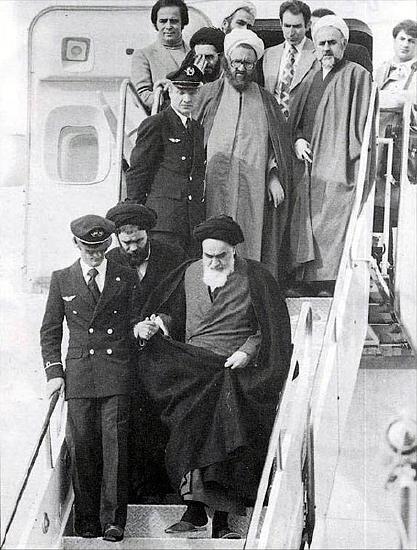
Ayatollah Ruhollah Khomeini was an outspoken critic who lived in exile. His message of an Iran based on the "laws of God" and the abolishment of monarchical rule appealed to the mass public. When the Shah left Iran in 1979, ostensibly for medical treatment, Khomeini took advantage of his absence and returned to Iran. His return was greeted by millions and he immediately went to work transforming the country into the Islamic Republic of Iran.
Identity in Iran is multi-faceted. As discussed earlier in the chapter, multiple identities can coexist successfully within one state. However, when those different identities claim to be the "true" identity, conflict (peaceful or violent) can ensue. To be Iranian can include several things. It can mean being Persian, being Muslim, or speaking Farsi. It can focus on the Islamic Revolution of 1979, or it can focus on Iranian culture before the revolution (Saleh, 2013). It can also depend on a political identity based in part on Iran's relationship with the West, particularly stemming from a revolution rooted in anti-Western sentiment (Hassan, 2016).
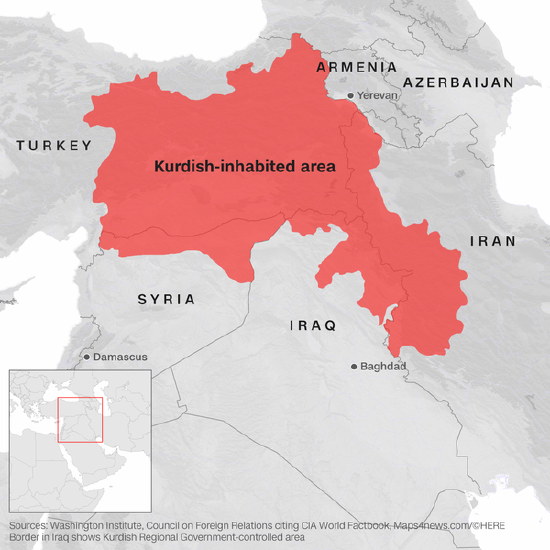
Another complication related to identity in Iran revolves around the Kurdish population. The Kurds are an indigenous ethnic group with a shared language who historically live in parts of Iran, Iraq, Syria, and Turkey. The Kurds do not have their own state, but there is an identifiable area of land often called "Kurdistan" (Britannica). Although the Kurds have lived in the area that is now Iran for centuries, they do not identify as Iranian. They feel "excluded from the political system...and do not exhibit any emotional connection with Iranian identity." The Kurds have been seeking independence since at least the middle of the 20th century and armed conflicts have been common in and near Kurdish areas of Iran (as well as those in Turkey, Iraq, and Syria). Since the Iranian government sees this as "an affront to the official rhetoric of ethnic unity," it has reacted with military force (Akbarzaheh, et al, 2019). In 2017, when the Kurds announced a referendum on independence, the Iranian government threatened to "close all border crossings" and hinted at the possibility of "more forceful and frequent military action" (Nadimi, 2017).
Figure \(\PageIndex{8}\): Geographical map of Kurdish inhabited areas of Iran, Iraq, Syria, and Turkey. (Source:Map of Kurdistan by CIA viaCIA World Factbook is licensed under CC BY-SA 4.0)
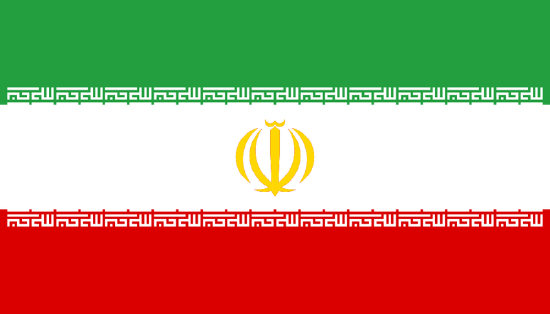
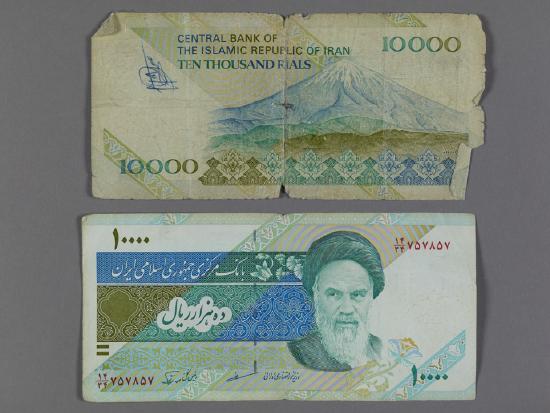
Similar to Israel, religion features prominently in Iranian symbols, such as its flag and currency.
Figure \(\PageIndex{9}\): The flag of the Islamic Republic of Iran. (Source: Iran's Flag by Mehregaan via Wikimedia Commons is licensed under CC BY-SA 4.0)
Above, the green stripe represents the Islamic faith, the white stripe stands for peace, and the red stripe represents courage. After the 1979 Revolution, the inscription "Allahu akbar" (translated as "God is great") was added above and below the center symbol. The phrase is repeated on the flag 22 times, a reference to the date of the revolution.
Below, the Iranian banknotes also feature religious imagery.