Figure \(\PageIndex{1}\): An oil painting of Mary Anning and her dog, Tray, prior to 1845. The “Jurassic Coast” of Lyme Regis is in the background. Notice that Anning is pointing at a fossil!
Mary Anning (1799–1847) is likely the most famous fossil hunter you’ve never heard of (Figure 7.1). Anning lived her entire life in Lyme Regis on the Dorset coast in England. As a woman, born to a poor family, with a minimal education (even by 19th-century standards), the odds were against Anning becoming a scientist (Emling 2011, xii). It was remarkable that Anning was eventually able to influence the great scientists of the day with her fossil discoveries and her subsequent hypotheses regarding evolution.
Figure \(\PageIndex{2}\): A Walk at Dusk, 1830-1835, by Caspar David Friedrich. The prehistoric world fascinated scholars and was an accepted part of Earth’s history, even if explanation defied non-secular thought.
The time when Anning lived was a remarkable period in human history because of the Industrial Revolution in Britain. Moreover, the scientific discoveries of the 18th century set the stage for great leaps of knowledge and understanding about humans and the natural world. Barely a century earlier, Sir Isaac Newton had developed his theories on physics and become the president of the Royal Society of London (Dolnick 2011, 5). In this framework, the pursuit of intellectual and scientific discovery became a popular avocation for many individuals, the vast majority of whom were wealthy men (Figure 7.2).
Figure \(\PageIndex{3}\): The “Jurassic Coast” of Lyme Regis: the home of fossil hunter Mary Anning.
In spite of the expectations of Georgian English society to the contrary, Anning became a highly successful fossil hunter as well as a self-educated geologist and anatomist. The geology of Lyme Regis, with its limestone cliffs, provided a fortuitous backdrop for Anning’s lifework. Now called the “Jurassic Coast,” Lyme Regis has always been a rich source for fossilized remains (Figure 7.3). Continuing her father’s passion for fossil hunting, Anning scoured the crumbling cliffs after storms for fossilized remains and shells. The work was physically demanding and downright dangerous. In 1833, while searching for fossils, Anning lost her beloved dog in a landslide and nearly lost her own life in the process (Emling 2011).
Figure \(\PageIndex{4}\): Plesiosaurus, illustrated and described by Mary Anning in an undated handwritten letter.
Around the age of 10, Anning located and excavated a complete fossilized skeleton of an ichthyosaurus (“fish lizard”). She eventually found Pterodactylus macronyx and a 2.7-meter Plesiosaurus, considered by many to be her greatest discovery (Figure 7.4). These discoveries proved that there had been significant changes in the way living things appeared throughout the history of the world. Like many of her peers, including Darwin, Anning had strong religious convictions. However, the evidence that was being found in the fossil record was contradictory to the Genesis story in the Bible. In The Fossil Hunter: Dinosaurs, Evolution, and the Woman Whose Discoveries Changed the World, Anning’s biographer Shelley Emling (2011, 38) notes, “the puzzling attributes of Mary’s fossil [ichthyosaurus] struck a blow at this belief and eventually helped pave the way for a real understanding of life before the age of humans.”
Intellectual and scientific debate now had physical evidence to support the theory of evolution, which would eventually result in Darwin’s seminal work, On the Origin of Species (1859). Anning’s discoveries and theories were appreciated and advocated by her friends, intellectual men who were associated with the Geological Society of London. Regrettably, this organization was closed to women, and Anning received little official recognition for her contributions to the field of natural history and paleontology. Even today, Anning’s contributions are largely overlooked, a wrong that will be hopefully corrected. It is clear that Anning’s knowledge, diligence, and uncanny luck in finding magnificent specimens of fossils earned her unshakeable credibility and made her a peer to many antiquarians (Emling 2011).
Fossil hunting is still providing evidence and a narrative of the story of Earth. Mary Anning recognized the value of fossils in understanding natural history and relentlessly championed her theories to the brightest minds of her day. Anning’s ability to creatively think “outside the box”—skillfully assimilating knowledge from multiple academic fields—was her gift to our present understanding of the fossil record. Given how profoundly Anning has shaped how we, in the modern day, think about the origins of life, it is surprising that her contributions have been so marginalized. Anning’s name should be on the tip of everyone’s tongue. Fortunately, at least in one sense of the word, it is. The well-known tongue twister, below, was actually written about Mary Anning:
She sells sea-shells on the sea-shore
The shells she sells are sea-shells, I’m sure
For if she sells sea-shells on the sea-shore
Then I’m sure she sells sea-shore shells.
—T. Sullivan (1908)
Developing Modern Methods
Figure \(\PageIndex{5}\): Ammonites are very common and date as far back as the early Jurassic with many variations. They are the fossilized remains of extinct water creatures that are characterized by tightly coiled shells. This ammonite has been cut in half to reveal the intricate interior structure and polished.
Prior to the 19th century, the overwhelming majority of Westerners believed that the physical appearances of humans and all living things were unchanged since creation and that “Creation” was the work of “God,” as specified by the Holy Scriptures. To even consider that humans and animals might have evolved over time was practically an admission that the Christian God had made mistakes that needed correction in His creation of Earth and all living things (Emling 2011, 38). Thus, the Bible was viewed as a literal and rigid history of the world, and there was no tolerance for the possibility of natural forces in science to bring about change in speciation. To think otherwise was considered heresy and was punishable by excommunication from the Church—or even death. The limited vision imposed by the Church on this matter significantly restricted the way scholars could formulate hypotheses about natural history (Emling 2011, 39). In 1650, Bishop James Ussher made a famous calculation based on his study of the Old Testament that Creation occurred on Sunday (the first day of Creation), October 23, 4004 B.C. (Barr 1984, 575). Ussher’s chronology made sense in the face of limited evidence and the historical detail documented in the Bible. Many learned men, including Martin Luther, had made similar calculations using the Bible (Braterman 2013). Other physical evidence, such as prehistoric henges or megaliths, neatly fell into this timeline that the world was, at most, 6,000 years old. A dinosaur bone was discovered shortly after Ussher’s chronology had been published, but it was considered to have belonged to a giant human as the term “dinosaur” (“terrible lizard”) was not used until 1842. Fossils such as ammonites (Figure 7.5), vertebrae, and belemnites were often found in layers of crumbling cliffs. However, they were not recognized as the fossilized remains of creatures both extinct (terminated or vanished) and extant (still surviving). Instead, fossils were used in folk medicine or treasured as amulets for luck or protection. Because of a lack of evidence to the contrary and the overwhelming pressure of the Church, natural science was bordering on stagnation, and folklore unofficially explained most poorly understood natural phenomena. Simply put, “scientists were still trying to fit geologic evidence into Biblical chronology” (Einhard 1998).
Figure \(\PageIndex{6}\): Murexsul (Miocene) This fossil was found at the Naval Weapons Center, China Lake, California, in 1945. The fossil was buried deep in the strata and was pulled out of the ground along with a crashed “Fat Boy” missile after atomic missile testing (S. Brubaker, March 9, 2018, pers. comm).
However, during the Scientific Revolution, Scotsman James Hutton hypothesized about the formation of Earth and provided a much longer timeline of events, which would eventually support the theory of evolution. Hutton’s theory of Deep Time was crucial to the understanding of fossils. Deep Time gave the history of Earth enough time—4.543 billion years—to encompass continental drift, the evolution of species, and the fossilization process. A second Scotsman, Charles Lyell, propelled Hutton’s work into his own theory of uniformitarianism, the doctrine that Earth’s geologic formations are the work of slow geologic forces. Uniformitarianism was a theory that clashed with the church’s doctrine of catastrophism, the belief that Earth’s formation was due to a set of relatively quick biblical catastrophic events. Noah’s flood, as described in the book of Genesis, is an example of a catastrophic event. Lyell’s three-volume work, Principles of Geology (1830–1833), was influential to naturalist Charles Darwin (see Chapter 2 for more information on Darwin’s work). In fact, Lyell’s first volume accompanied Darwin on his five-year voyage around the world on the HMS Beagle (1831–1836). The concepts proposed by Lyell gave Darwin an opportunity to apply his working theories of evolution by natural selection and a greater length of time with which to work. These resulting theories were important scientific discoveries and paved the way for the “Age of Wonder,” or the second Scientific Revolution (Holmes 2010, xvi).
The work of Anning, Darwin, Lyell, and others laid the foundation for the modern methods we use today. Though anthropology is focused on humans and our primate relatives (and not dinosaurs as many people wrongly assume), you will see that methods developed in paleontology, geology, chemistry, biology, and physics are often applied in anthropological research. In this chapter, you will learn about the primary methods and techniques employed by biological anthropologists to answer questions about fossils, the mineralized copies of once-living organisms (Figure 7.6). Ultimately, these answers provide insights into human evolution. Pay close attention to ways in which modern biological anthropologists use other disciplines to analyze evidence and reconstruct past activities and environments.


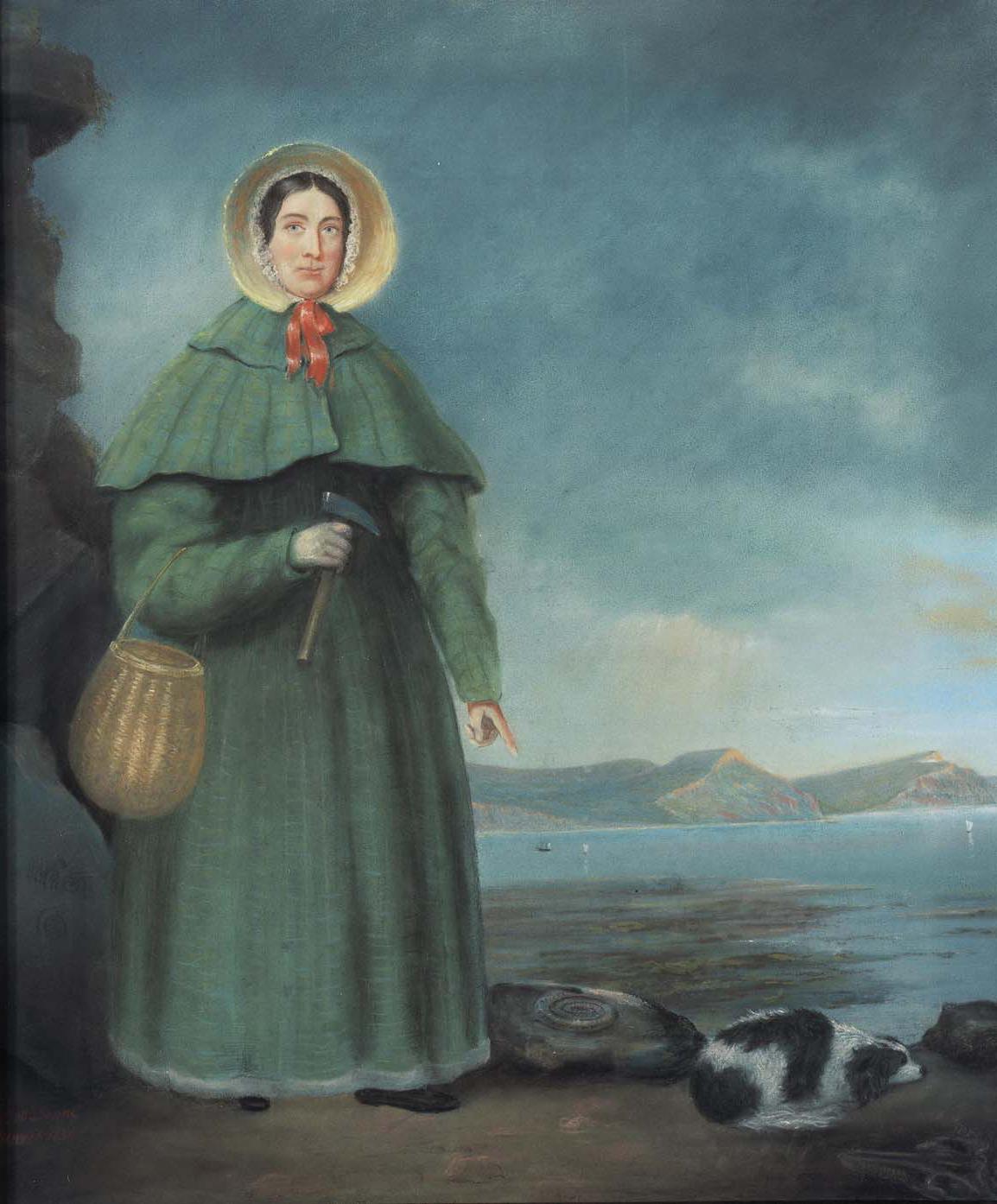 Figure \(\PageIndex{1}\): An oil painting of Mary Anning and her dog, Tray, prior to 1845. The “Jurassic Coast” of Lyme Regis is in the background. Notice that Anning is pointing at a fossil!
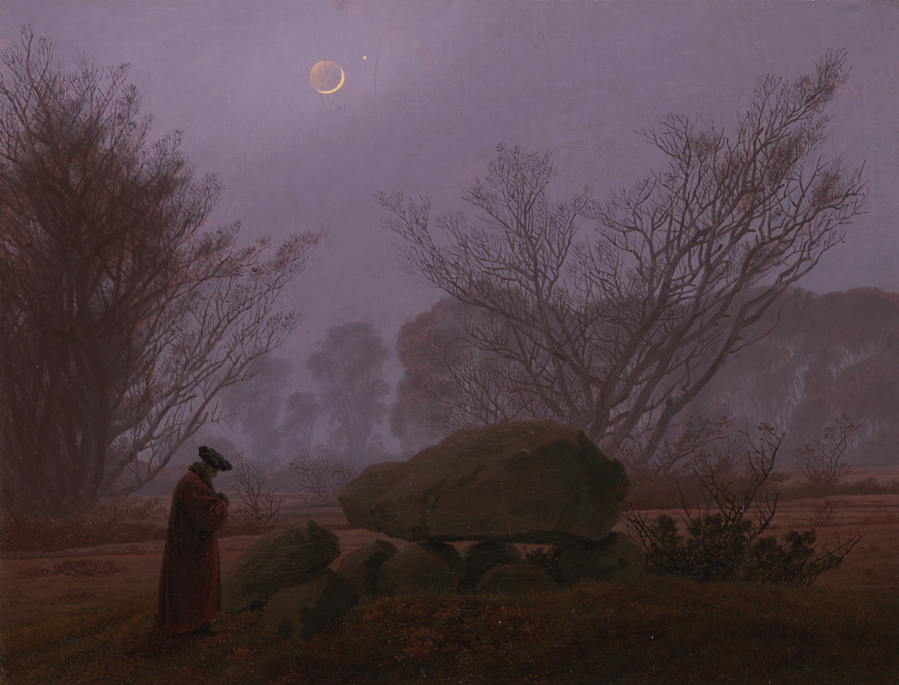 Figure \(\PageIndex{2}\): A Walk at Dusk, 1830-1835, by Caspar David Friedrich. The prehistoric world fascinated scholars and was an accepted part of Earth’s history, even if explanation defied non-secular thought.
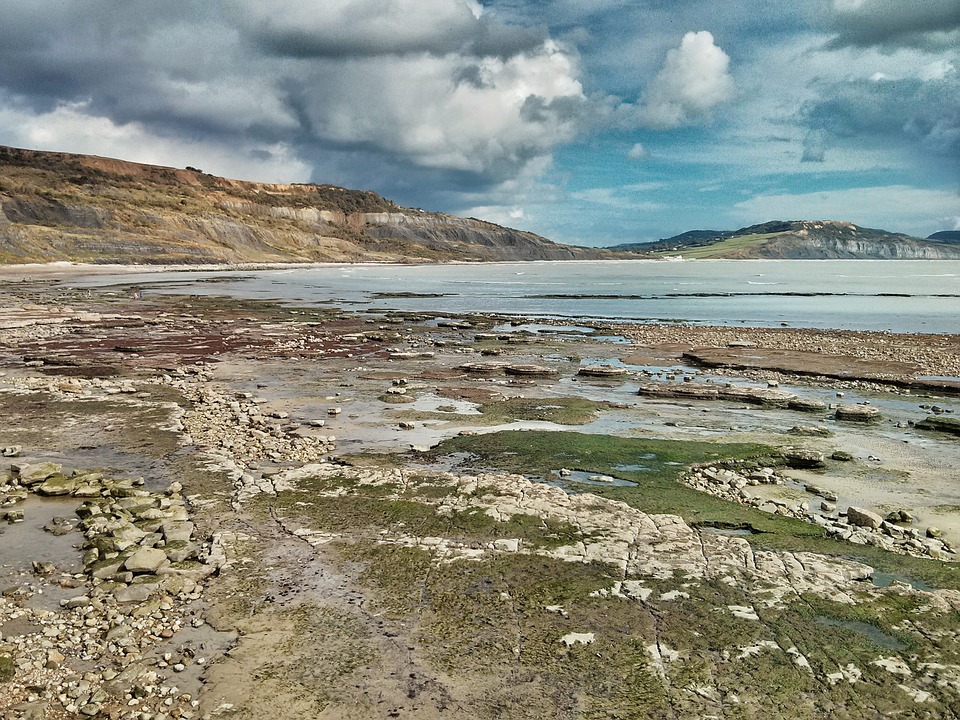 Figure \(\PageIndex{3}\): The “Jurassic Coast” of Lyme Regis: the home of fossil hunter Mary Anning.
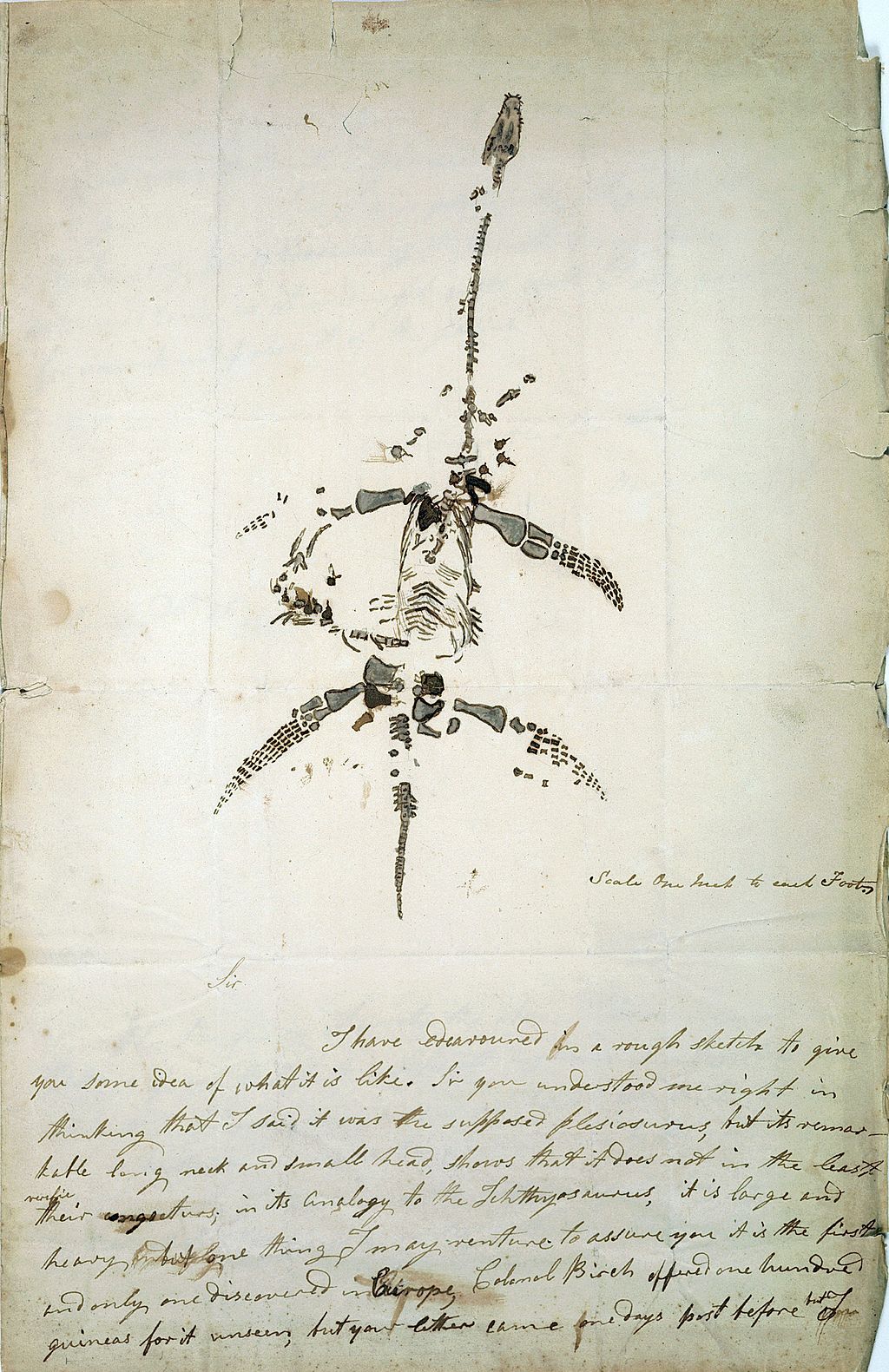 Figure \(\PageIndex{4}\): Plesiosaurus, illustrated and described by Mary Anning in an undated handwritten letter.
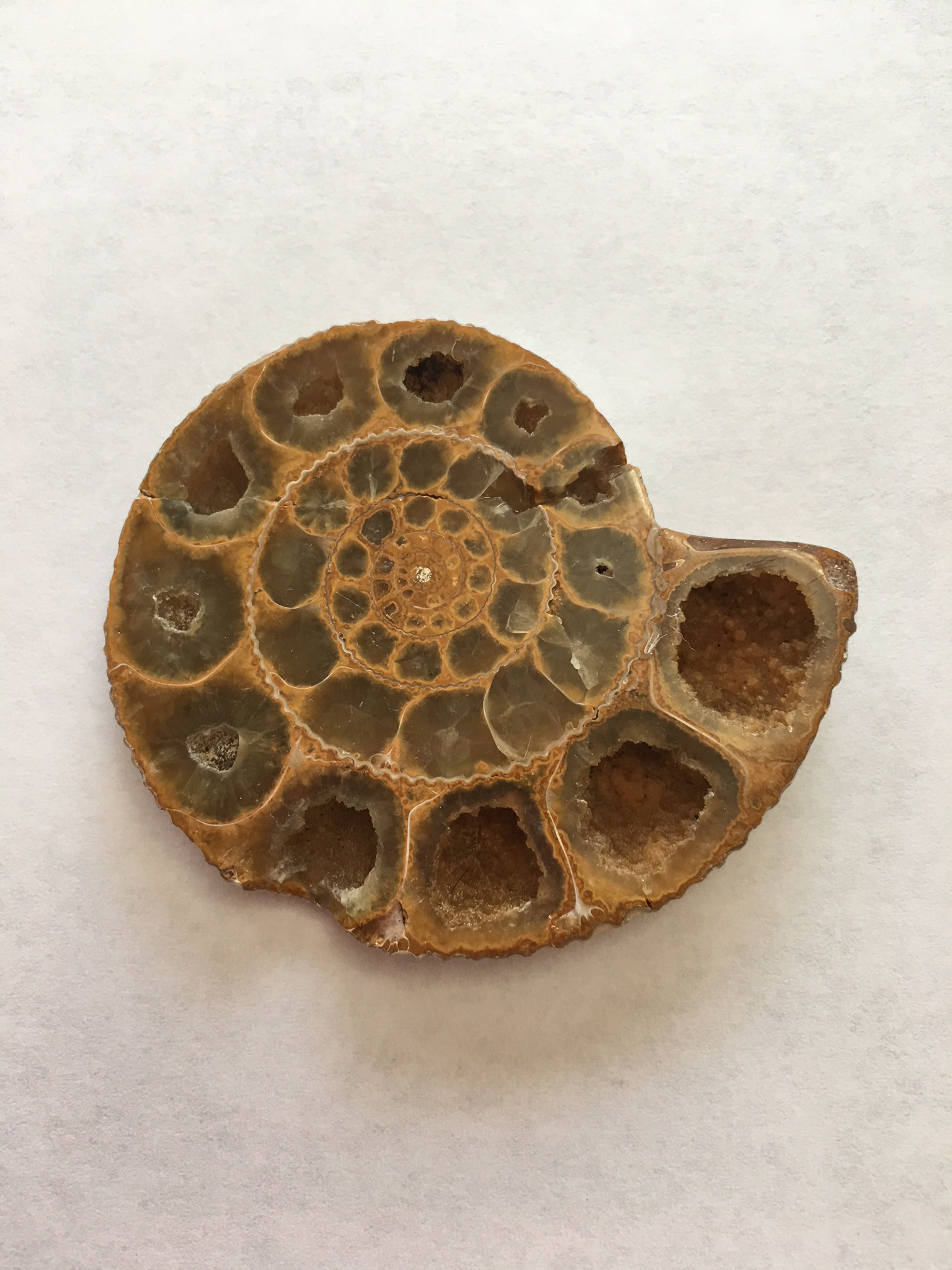 Figure \(\PageIndex{5}\): Ammonites are very common and date as far back as the early Jurassic with many variations. They are the fossilized remains of extinct water creatures that are characterized by tightly coiled shells. This ammonite has been cut in half to reveal the intricate interior structure and polished.
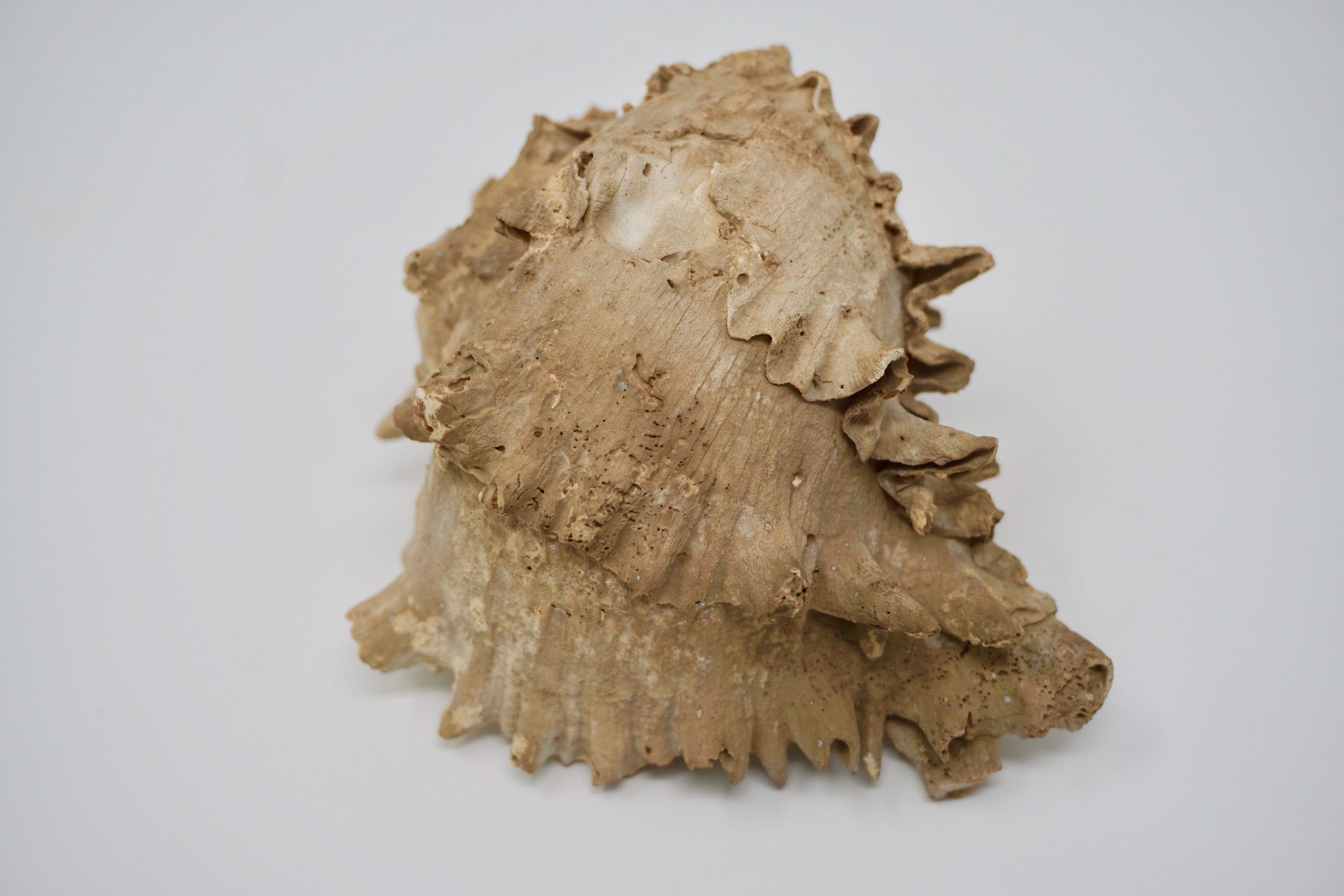 Figure \(\PageIndex{6}\): Murexsul (Miocene) This fossil was found at the Naval Weapons Center, China Lake, California, in 1945. The fossil was buried deep in the strata and was pulled out of the ground along with a crashed “Fat Boy” missile after atomic missile testing (S. Brubaker, March 9, 2018, pers. comm).