Although immigrants have high rates of labor force participation, they are less likely than native-born peers to have health insurance (Derose, Bahney, Lurie, & Escarce, 2009). There are few services in the United States that are as crucial and complex as the healthcare system, which continues to be a major indicator of socio-economic success. A person’s inability to access and utilize healthcare services gives a strong indication of critical unmet needs and barriers that impede the ability of successful integration and participation in society. Immigrants face substantial barriers to healthcare access, including restricted access to government based healthcare services, language difficulties, and cultural differences.
Reduced Use of Healthcare
Total health care expenditures are lower for immigrant adults than for their native-born peers (Derose et al., 2009). Additionally, immigrants are less likely to report a regular source or provider for health care, and report lower health care use than native-born peers (Derose et al., 2009). This means that overall, immigrants have less access to healthcare and less healthcare use than do most native-born individuals.
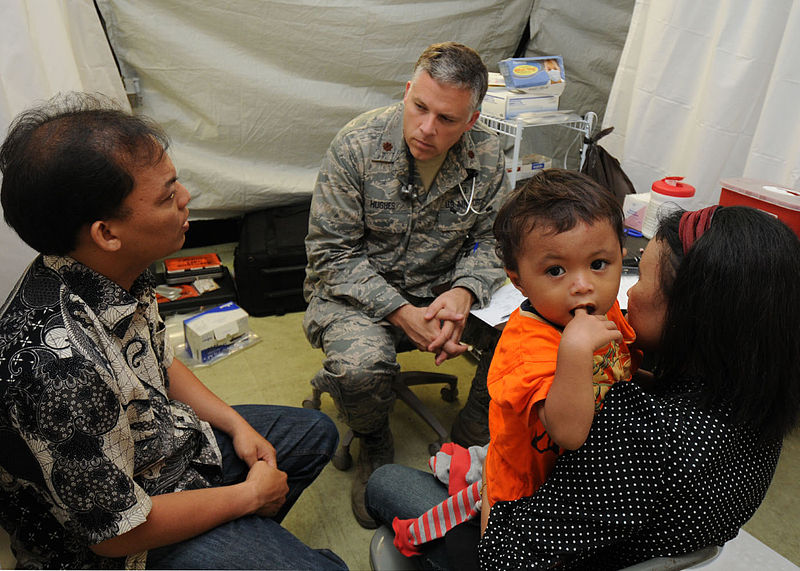
Undocumented immigrants have particularly low rates of health insurance and health care use (Ortega, Fang, Perez, Rizzo, Carter-Pokras, Wallace, & Gelberg, 2007). Undocumented Latinos/as have fewer physician visits annually than native born Latinos/as (Ortega et al., 2007). Undocumented immigrants are more likely than documented immigrants or native-born individuals to state that they have difficulty understanding their physicians or think they would get better care if they were a different race or ethnicity. Despite their low rates of use, immigrants are in need of healthcare. Children of immigrants are also more than twice as likely as children of natives to be in “fair” or “poor” health (Reardon-Anderson, Capps & Fix, 2002).
Mental Health
Families immigrate to the United States for various reasons. Some voluntary immigrants may choose to leave their country of origin in search of better opportunities, while others are forced to flee due to war, political oppression, or safety issues. Some families manage to stay together over the course of their journey, but many are divided or separated through the migration process. This is particularly true of refugee families whose migration is involuntary, hasty, and traumatic in nature (Rousseau, Mekki-Berrada, & Moreau, 2001). Refugees in particular may have survived traumatic events and violence including war, torture, multiple relocations, and temporary resettlements in refugee camps (Glick, 2010; Jamil, Hakim-Larson, Farrag, Kafaji, & Jamil, 2002; Keys & Kane, 2004; Steel, Chey, Silove, Marnane, Bryant, & Van Ommeren, 2009). The destructive nature of war “involves an entire reorganization of family and society around a long-lasting traumatic situation” (Rousseau et al., 2001, p. 1264) and individuals and families may continue to experience traumatic stress related to family left behind and stressful living conditions long after they have resettled.
When it comes to mental and physical health, refugees are a part of an especially vulnerable population. While some adjust to life in the United States without significant problems, studies have documented the negative impact of a trauma history on the psychological wellbeing of refugees (Birman & Tran, 2008; Keller, Lhewa, Rosenfeld, Sachs, Aladjem, Cohen, Smith, & Porterfield, K, 2006). Pre-migration experiences may precipitate refugee mental health concerns, particularly in the early stages of resettlement (Beiser, 2006; Birman & Tran, 2008). These experiences may include witnessing and experiencing violence, fleeing from a family home located in a city or village that is being destroyed, and walking to find refuge and safety for days or weeks with limited food, water, and resources. Post-migration conditions, such as adapting to living in an overcrowded refugee camp or trying to rebuild life in a foreign country, as well as structural stressors, such as going through the legal process of obtaining asylum or legal documentation, may also precipitate a cascade of individual mental health and family relational issues. The pre- and post-migration experiences and stressors of refugees may compound and create a “cumulative effect on their ability to cope” (Lacroix & Sabbah, 2011). Spending weeks, months, or even years managing stressful and traumatic experiences may weaken an individual or family’s ability to cope with continued change and the multiple stressors of resettlement.
While it is reported that refugees are at risk for higher rates of psychiatric disorders such as posttraumatic stress disorder (PTSD), depression, anxiety, complicated grief, psychosis, and suicide (Akinsulure-Smith & O’Hara, 2012; Birman & Tran, 2008; Jamil et al., 2002; Jensen, 1996; Kandula, Kersey, & Lurie, 2004; Steel et al., 2009), immigrants are also at risk for these mental health complications, especially if they have been exposed to multiple traumatic events. However, when working with immigrants and refugees, it is important to remember that one cannot assume that all members of an affected population are psychologically traumatized and will have the same mental health symptoms (Shannon, Wieling, Simmelink, & Becher, 2014; Silove, 1999). Further, mental health symptomatology is expressed in a variety of culturally sanctioned ways. For example, somatic complaints such as headaches, dizziness, palpitations, and fatigue might be a way to avoid stigma and shame often associated with admitting to mental health problems (Shannon, Wieling, Im, Becher, & Simmelink, 2014).
We know that the mental health of an individual does not exist in isolation; the experiences of one person in a family or community affect others. Unfortunately, the majority of the literature about immigrant and refugee mental health focuses on mental health as an individual process; the systemic ramifications are understudied and underrepresented in academic literature (Landau, Mittal, & Wieling, 2008; Nickerson, Bryant, Brooks, Steel, Silove, & Chen, 2011).