Other Environmental Problems
There is a wide range of other environmental problems, often related to climate change either as consequences of it or due to their shared causes. Here we discuss problems related to the air, water, and earth (the ground), as well as consequences of nuclear power.
Air
Estimates of the annual number of US deaths from air pollution range from a low of 10,000 to a high of 60,000 (Reiman & Leighton 2010). The worldwide toll is much greater, as the World Health Organization (2025) warns that air pollution is associated with seven million premature deaths each year.
These deaths stem from the health conditions that fine particulates in the air cause, including heart disease, lung cancer, strokes, and respiratory disease such as asthma. Ambient or outdoor pollution is caused by energy production, vehicles, power generation, waste incineration, and polluting industries, whereas household air pollution is caused by open fires, karosene, coal, and other sources.
Some air pollution stems from the burning of fossil fuels such as oil, gas, and coal. This problem occurs not only in the wealthy industrial nations but also in the nations of the developing world; countries such as China and India have some of the worst air pollution. In developing nations, mortality rates of people in cities with high levels of particulate matter (carbon, nitrates, sulfates, and other particles) are 15-50% higher than the mortality rates of those in cleaner cities. In European countries, air pollution is estimated to reduce average life expectancy by 8.6 months. The World Health Organization (2011) did not exaggerate when it declared that air pollution “is a major environmental health problem affecting everyone in developed and developing countries alike.”
Children and Our Future
Children and Environmental Health Hazards
As we consider environmental problems, we must not forget the world’s children, who are at special risk for environmental health problems precisely because they are children. Their bodies and brains grow rapidly, and they breathe in more air per pound of body weight than adults do. They also absorb substances, including toxic substances from their gastrointestinal tract faster than adults do.
These and other physiological differences all put children at greater risk than adults for harm from environmental health hazards. Children’s behavior also puts them at greater risk. For example, no adult of normal intelligence would eat paint chips found on the floor, but a young child can easily do so. Children also play on lawns, playgrounds, and other areas in which pesticides are often used, and this type of activity again gives them greater exposure. Young children also put their hands in their mouths regularly, and any toxins on their hands are thereby ingested.
Poverty compounds all these problems. Poor children are more likely to live in houses with lead paint, in neighborhoods with higher levels of air pollution, and in neighborhoods near to hazardous waste sites. Poor children of color are especially at risk for these environmental problems.
Three of the greatest environmental health hazards for children are lead, pesticides, and air pollution. Lead can cause brain and nervous system damage, hearing problems, and delayed growth among other effects; pesticides can cause various problems in the immune, neurological, and respiratory systems; and air pollution can cause asthma and respiratory illnesses. All these health problems can have lifelong consequences.
Unfortunately, certain environmentally induced health problems for children are becoming more common. For example, US children’s asthma cases have increased by more than 40 percent since 1980, and more than four hundred American children now have asthma. Two types of childhood cancer thought to stem at least partly from environmental hazards have also increased during the past two decades: acute lymphocytic by 10% and brain tumors by 30%.
It should be evident from this overview that environmental health hazards pose a serious danger for children in the United States and the rest of the world. Because children are our future, this danger underscores the need to do everything possible to improve the environment.
Source: Children’s Environmental Health Network 2009
Water
Water quality is also a serious problem. Drinking water is often unsafe because of poor sanitation procedures for human waste in poor nations and because of industrial discharge into lakes, rivers, and streams in wealthy nations. Inadequate sanitation and unsafe drinking water cause parasitic infections and diseases such as diarrhea, malaria, cholera, intestinal worms, typhoid, and hepatitis A.
The World Health Organization estimates that unsafe drinking water and inadequate sanitation cause the following number of annual deaths worldwide: 2.5 million deaths from diarrhea, including 1.4 million child deaths from diarrhea; 500,000 deaths from malaria; and 860,000 child deaths from malnutrition. At least 200 million more people annually suffer at least one of these serious diseases due to inadequate sanitation and unsafe drinking water (Cameron, Hunter, Jagals, & Pond 2011; Prüss-Üstün, Bos, Gore, & Bartram 2008).
The world’s oceans are also at peril for several reasons, with “potentially dire impacts for hundreds of millions of people across the planet,” according to a news report (ScienceDaily 2010). A major reason is that overfishing of fish and mammals has dramatically reduced the supply of certain ocean animals. This reduction certainly makes it difficult for people to eat certain fishes at restaurants or buy them at supermarkets, but a far more important problem concerns the ocean food chain (Weise 2011). As the supply of various ocean animals has dwindled, the food supply for the larger ocean animals that eat these smaller animals has declined, putting the larger animals at risk. And as the number of these larger animals has declined, other animals that prey on these larger animals have had to turn to other food sources or not have enough to eat. This chain reaction in the ocean food chain has serious consequences for the ocean’s ecosystem.
One example of this chain reaction involves killer whales and sea otters in the ocean off of western Alaska (Weise 2011). Killer whales eat many things, but sea lions and harbor seals form a key part of their diet. However, the supply of these ocean mammals in western Alaska and elsewhere has decreased because of human overfishing of their prey fish species. In response, killer whales have been eating more sea otters, causing a 90% decline in the number of sea otters in western Alaska. Because sea otters eat sea urchins, the loss of sea otters in turn has increased the number of sea urchins there. And because sea urchins consume kelp beds, kelp beds there are disappearing, removing a significant source of food for other ocean life (Estes et al. 2011).
Another example of the ocean chain reaction concerns whales themselves. The whaling industry that began about 1,000 years ago and then intensified during the eighteenth century severely reduced the number of whales and made right whales almost extinct. In southern oceans, whale feces are an important source of nutrients for very small animals and plankton. As the whale population in these oceans has declined over the centuries, these animals and plankton that are essential for the ocean’s ecosystem have suffered immeasurable losses (Weise 2011).
In addition to overfishing, bycatch, the unintentional catching and killing of fish, marine mammals, sea turtles, and seabirds while other fish are being caught, also endangers hundreds of ocean species and further contributes to the chain reaction we have described. The US National Oceanic and Atmospheric Administration (2012) says that bycatch “can have significant social, environmental, and economic impacts.” It costs the fishing industry much time and money, it threatens many ocean species, and it endangers the ocean’s ecosystem." One example is sea turtles, whose numbers have declined so steeply in recent decades that six of the seven species of sea turtles are in danger of extinction. The major reason for this danger is bycatch from shrimp trawl nets and other types of fishing. This bycatch has killed millions of sea turtles since 1990 (Viegas 2010).
Other ocean problems stem from climate change. The oceans’ coral reefs are among the most colorful and beautiful sights in the world. More important, they are an essential source of nutrients for the oceans’ ecosystem and a major source of protein for 500 million people. They help protect shorelines from natural disasters such as tsunamis, and they attract tens of billions of dollars in tourism.

The decline of the whale population due to the whaling industry threatens the world’s supply of plankton and other very small marine animals.
Image courtesy of Joel T. Barkan
Despite all these benefits, coral reefs have long been endangered by overfishing, tourism, and coastal development, among other factors. Scientists have now found that climate change is also harming coral reefs (Rudolf 2011). The global warming arising from climate change is overheating coral reefs throughout the world. This overheating in turn causes the reefs to expel the algae they consume for food; the algae are also responsible for the reefs’ bright colors. The reefs then turn pale and die, and their deaths add to the ocean’s food chain problem already discussed. Scientists estimate that three-fourths of the earth’s reefs are at risk from global warming, and that one-fifth of all reefs have already been destroyed. They further estimate that almost all reefs will be at risk by 2050.
Global warming will continue to be a main culprit in this regard, but so will increasing acidity, yet another problem arising from climate change. As carbon dioxide is released into the atmosphere, much of it falls into the ocean. This lowers the oceans’ pH level and turns the oceans more acidic. This increasing acidity destroys coral reefs and also poses a risk to commercial species such as clams, lobsters, and mussels.
An additional ocean problem stemming from climate change is rising sea levels (Daley 2011). Global warming has caused polar ice caps to melt and the seas to rise. This problem means that storm surges during severe weather are becoming an ever-greater problem. Even without storm surges, much coastal land has already been lost to rising ocean levels. Despite these problems, many coastal communities have failed to build adequate barriers that would minimize damage from ocean flooding.
Earth
Pollution of the air and water is an environmental danger, but so is pollution of the ground, particularly from hazardous waste. Hazardous wastes are unwanted materials or byproducts that are potentially toxic. If discarded improperly, they enter the ground and/or bodies of water and eventually make their way into the bodies of humans and other animals and/or harm natural vegetation.
Two major sources of hazardous waste exist: Commercial products such as pesticides, cleaning fluids, and certain paints, batteries, and electronics; and byproducts of industrial operations such as solvents and wastewater. Hazardous waste enters the environment through the careless actions of homeowners and other consumers, and also through the careless actions of major manufacturing corporations. It can cause birth defects, various chronic illnesses and conditions, and eventual death.
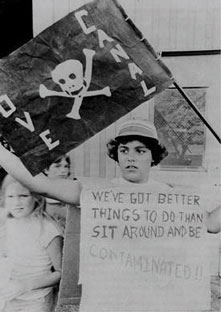
Sometimes companies have dumped so much hazardous waste into a specific location that they create hazardous waste sites. These sites are defined as parcels of land and water that have been contaminated by the dumping of dangerous chemicals into the ground by factories and other industrial operations. One infamous hazardous waste site is the Love Canal, an area in a corner of Niagara Falls, New York. During the 1940s and 1950s, a chemical company dumped 20,000 tons of toxic chemicals into the canal and then filled it in with dirt and sold it for development to the local school board. A school and more than eight hundred homes, many of them low income, were later built just near the site. The chemicals eventually leached into the groundwater, yards, and basements of the homes, reportedly causing birth defects and other health problems.
Nuclear Power
Nuclear power has been an environmental controversy at least since the 1970s. Proponents of nuclear power say it is a cleaner energy than fossil fuels such as oil and coal and does not contribute to global warming. Opponents of nuclear power counter that nuclear waste is highly dangerous no matter how it is disposed, and they fear meltdowns that can result if nuclear power plant cores overheat and release large amounts of radioactive gases into the atmosphere.
The most serious nuclear plant disaster involved the Chernobyl plant in Ukraine in 1986. Chernobyl’s core exploded and released radioactive gases into the atmosphere that eventually spread throughout Europe. The amount of radiation released was four hundred times greater than the amount released by the atomic bomb that devastated Hiroshima at the end of World War II. About five-dozen people (Chernobyl workers or nearby residents) soon died because of the disaster. Because radiation can cause cancer and other health problems that take years to develop, scientists have studied the health effects of the Chernobyl disaster for the last quarter-century. According to the United Nations Scientific Committee of the Effects of Atomic Radiation (UNSCEAR), an estimated 27,000 additional cancer deaths worldwide will eventually result from the Chernobyl disaster (Gronlund 2011).
Seven years earlier in March 1979, a nuclear disaster almost occurred in the US at the Three Mile Island plant in central Pennsylvania. A series of technological and human failures allowed the plant’s core to overheat to almost disastrous levels. The nation held its breath for several days while officials sought to bring the problem under control. During this time, some 140,000 people living within twenty miles of the plant were evacuated. The near disaster severely weakened enthusiasm for nuclear power in the United States, and the number of new nuclear plants dropped sharply in the ensuing two decades (Fischer 1997).
Japan was the site of the worst nuclear disaster since Chernobyl in March 2011, when an earthquake and tsunami seriously damaged a nuclear plant in the Fukushima region, 155 miles north of Tokyo. More than 80,000 residents had to be evacuated because of the massive release of radioactive gases and water, and they remained far from their homes a year later as high levels of radiation continued to be found in the evacuated area. It will take at least thirty years to fully decommission the damaged reactors at Fukushima. A news report on the anniversary of the disaster described the desolation that remained:
“What’s most striking about Japan’s nuclear exclusion zone is what you don’t see. There are no people, few cars, no sign of life, aside from the occasional livestock wandering empty roads. Areas once home to 80,000 people are now ghost towns, frozen in time. Homes ravaged from the powerful earthquake that shook this region nearly a year ago remain virtually untouched. Collapsed roofs still block narrow streets. Cracked roads make for a bumpy ride... This nuclear wasteland may not be livable for decades” (Fujita 2012).
In February 2012, the US Nuclear Regulatory Commission (NRC) issued a study that said the risk from nuclear power accidents in the US was 'very small.' If an accident should occur, the NRC concluded, plant operators would have time to cool down reactor cores and prevent or reduce the emission of radiation (DiSavino 2012). However, the Union of Concerned Scientists (UCS 2011) is more concerned about this risk. It says that several US reactors are of the same design as the Fukushima reactors and thus potentially at risk for a similar outcome if damaged by an earthquake. According to the UCS, “If [these reactors] were confronted with a similar challenge, it would be foolish to assume the outcome would not also be similar.” It adds that although earthquakes can cause fires at reactors, US plants routinely violate fire protection standards. A news report on the similarities between US nuclear power plants and the Fukushima plant reached a similar conclusion, noting that US nuclear power plants “share some or all of the risk factors that played a role at Fukushima” (Zeller 2011).

Critics say many US nuclear plants lack adequate protection against several kinds of dangers.
© Thinkstock
As this conclusion implies, nuclear power critics say NRC oversight of the nuclear industry is too lax. A 2011 investigation by the Associated Press (AP) yielded support for this criticism (Donn 2011). The AP found that the NRC has been “working closely with the nuclear power industry to keep the nation’s aging reactors operating within safety standards by repeatedly weakening those standards or simply failing to enforce them.” The report continued, “Time after time, officials at the [NRC] have decided that original regulations were too strict, arguing that safety margins could be eased without peril.” For example, when certain valves at nuclear plants leaked, the NRC revised its regulations to permit more leakage. Also, when cracking of steam generator tubes allowed radiation to leak, standards on tubing strength were weakened. And when reactors began to violate temperature standards, the NRC almost doubled the permitted temperatures. The investigation found 'thousands' of problems in aging reactors that it said the NRC have simply ignored, and it concluded that a 'cozy relationship' exists between the NRC and the nuclear industry.
A retired NRC engineer interviewed by the AP agreed that his former employer too often accommodated the nuclear industry by concluding that existing regulations are overly stringent. “That’s what they say for everything, whether that’s the case or not,” the engineer said (Donn 2011).
Environmental Inequality
As mentioned on the Overview page, an emphasis of environmental sociology is the social inequality associated with environmental problems. Environmental injustice refers to the fact that people in marginalized groups, particularly low-income people and people of color, are disproportionately likely to experience consequences of various environmental problems. It has also been referred to as environmental racism, though this term refers more specifically to the greater likelihood of people of color to experience environmental problems and their consequences (Walker 2012).
According to the American Sociological Association report mentioned on the Overview page, the emphasis of environmental sociology on environmental injustice reflects the emphasis that the larger discipline of sociology places on social inequality: “A central finding of sociology is that unequal power dynamics shape patterns of social mobility and access to social, political, and economic resources.” The report adds that global climate change will have its greatest effects on the poorest nations: “Many of the countries least responsible for the rise in greenhouse gases will be most likely to feel its impacts in changes in weather, sea levels, health care costs, and economic hardships” (Nagel et al. 2010: 17).

Climate change has the greatest impact on people in the poorest nations, even though these nations are the least responsible for greenhouse gases.
Image courtesy of Hamed Saber, http://www.flickr.com/photos/hamed/266139764
As the report notes, this injustice can be seen on a broader scale with inequality between nations around the world; however, it may also been seen on a smaller scale with inequality between communities within one nation.
Let's first examine this issue on a global scale. The index map below combines a country’s vulnerability to climate change, and its readiness to improve resilience. Much of Africa is both vulnerable and not ready. Most of North America is less vulnerable and more ready. A common saying in the environmental movement is, “Those who contribute the least suffer the most.” This means that the poorest people use the least planetary resources, so they contribute to climate change the least. However, they suffer the most from climate change.

This map shows how vulnerable people in certain countries are to climate change. The United States, Australia, parts of Western Europe and the southern part of South America experience low vulnerability. Russia, most of Africa and Asia, and most of South America experience moderate or high vulnerability.
“Unequal Vulnerability” by WorldFish is licensed under CC BY-NC-ND 2.0
For example, Africa contributes the least greenhouse gasses, but they are the most vulnerable to climate change. The US is a high contributor of emissions but the least vulnerable to climate change. While this model doesn’t hold true for every country, the saying encapsulates a key issue with climate change.
Additionally, environment-harming industries go where resources exist, and the people there may be powerless to resist. To explore this further, we will look at the experience of people in Nigeria and oil production.
Nigeria is a country on the west coast of Africa, as shown in the figure below. More than 40% of the people in Nigeria live in extreme poverty, defined as living on less than $1.40 per day (Cuaresma 2018). Less than 15% of the people have access to clean fuel for cooking (Ritchie 2021), and less than 60% have access to sufficient electricity (Ritchie & Rosado 2021). At the same time, oil companies have made Nigeria one of the world’s top oil exporters.
This map shows Nigeria (the blue nation toward the bottom right), a country on the west coast of Africa. Nearly everyone there lives on less than $30.00 a day, and many people live on much less.
“West Africa map” by PirateShip6 is licensed under CC BY-SA 4.0
Oil companies use a practice called gas flaring, burning the waste gas from oil exploration rather than disposing of it in other ways (pictured below). Nigerians experience rashes and sores because of the toxic fumes. In one study, children exposed to flaring experience coughs, respiratory issues, fevers, and other poor health symptoms. The rate of child deaths in children under five also slightly increases with gas flaring (Alimi & Gibson 2022). The pollution contaminates the land, so women can’t grow enough food. This pollution also contaminates water, leaving less for drinking and crop irrigation. One article notes that the women in the Niger Delta are poor because the environmental toxins are poisoning their plants. Women plant cassava to make their flour; however, the cassava roots are dying and the women can’t replace them (Lawal 2021).

This image shows a flame of gas burning in the background, and low quality houses and the people who live in them. Gas flaring causes poor health in Nigeria.
“The impact of gas flaring on child health in Nigeria” by Ed Kashi, World Bank is included under fair use
Many people there are migrating to bigger cities, but that doesn’t solve the local pollution and emissions problem. The article In Nigeria, Gas Giants Get Rich as Women Sink Into Poverty documents the story in more detail, including pictures of the impacts of the gas flares, if you would like to learn more.
Those who use the least resources are typically impacted the most by environmental problems. In the Nigeria case, the environmental impact occurs on a different continent than most of the people using the oil being produced. If you’d like to look more deeply into this problem, watch Who Is Responsible For Climate Change? – Who Needs To Fix It?.
Looking at global level inequality is important, but it masks vulnerabilities that are unique to communities within nations. The pattern remains that those who contribute less experience more consequences. As noted before, we are experiencing more extreme weather events related to climate change. With Hurricane Katrina in New Orleans, those who contributed the least to climate change suffered the most from this event. For instance, people with cars could evacuate, whereas people without cars often couldn’t. People without cars contributed the least to CO2 emissions but experienced the most loss related to the extreme weather event (Bullard 2008).
Other examples of environmental injustice abound. Almost all the hazardous waste sites we mentioned earlier are located in or near neighborhoods and communities that are largely populated by low-income people and people of color. In other words, when factories dump dangerous chemicals into rivers and lakes, the people living nearby are very likely to be low-income and of color.
Moreover, with the US, evidence shows that although low-income people are especially likely to be exposed to environmental problems, this exposure is even more likely if they are people of color than if they are white. This highlights the intersection of classism and racism, an intersectional perspective. As a review of this evidence concluded,
“It would be fair to summarize this body of work as showing that the poor and especially the nonwhite poor bear a disproportionate burden of exposure to suboptimal, unhealthy environmental conditions in the United States. Moreover, the more researchers scrutinize environmental exposure and health data for racial and income inequalities, the stronger the evidence becomes that grave and widespread environmental injustices have occurred throughout the United States” (Evans & Kantrowitz 2002: 323).
There has been much other scholarship on environmental injustice as well as on public policy efforts and activism aimed at reducing these forms of inequality. The Applying Social Research box below discusses some significant scholarship on environmental injustice.
Applying Social Research
Environmental Racism in the Land of Cotton
During the 1970s, people began to voice concern about the environment in the United States and across the planet. As research on the environment grew by leaps and bounds, some scholars and activists began to focus on environmental inequality in general and on environmental racism in particular. During the 1980s and 1990s, their research and activism spawned the environmental justice movement that has since shed important light on environmental inequality and racism and helped reduce these problems.
Research by sociologists played a key role in the beginning of the environmental justice movement and continues to play a key role today. Robert D. Bullard of Clark Atlanta University stands out among these sociologists for the impact of his early work in the 1980s on environmental racism in the South and for his continuing scholarship since. He has been recognized as a founder of environmental justice and was named by Newsweek as one of the thirteen most influential environmental leaders of the twentieth century, along with environmental writer Rachel Carson, former vice president Al Gore, and ten others.
Bullard’s first research project on environmental racism began in the late 1970s after his wife, an attorney, filed a lawsuit on behalf of Black residents in Atlanta who were fighting the placement of a landfill in their neighborhood. To collect data for the lawsuit, Bullard studied the placement of landfills in other areas. He found that every city-owned landfill in Houston was in a Black neighborhood, even though Black Americans amounted to only one-fourth of Houston residents at the time. He also found that three out of four privately owned landfills were in Black neighborhoods, as were six of the eight city-owned incinerators. He extended his research to other locations and later recalled what he discovered: “Without a doubt, it was a form of apartheid where whites were making decisions and black people and brown people and people of color, including Native Americans on reservations, had no seat at the table.”
In 1990, Bullard published his findings in his book Dumping in Dixie: Race, Class, and Environmental Quality. This book described the systematic placement in several Southern states of toxic waste sites, landfills, and chemical plants in communities largely populated by low-income residents and/or Black Americans. Dumping in Dixie was the first book to examine environmental racism and is widely credited with helping advance the environmental justice movement. It received some notable awards, including the Conservation Achievement Award from the National Wildlife Federation.
More recently, Bullard, along with other sociologists and scholars from other disciplines, has documented the impact of race and poverty on the experience of New Orleans residents affected by the flooding after Hurricane Katrina. As in many other cities, Black and low-income residents largely resided in the lower elevations in New Orleans, whereas white and higher-income residents largely resided in the higher elevations. The flooding naturally had a much greater impact on the lower elevations and thus on Black and poor people. After the flood, Black residents seeking new housing in various real estate markets were more likely than white residents to be told that no housing was available.
Bullard’s early work alerted the nation to environmental racism and helped motivate the Environmental Protection Agency in the 1990s to begin paying attention to it. His various research efforts are an outstanding example of how social research can increase understanding of a significant social problem.
Sources: Bullard 1990; Bullard & Wright 2009; Dicum 2006
As should be apparent from the discussion in this section, the existence of environmental injustice shows that social inequality in the larger society exposes some people much more than others to environmental dangers. This insight is one of the most important contributions of environmental sociology.
––
As evident from this page, environmental problems have serious consequences for individuals and communities across the world. We hope that this chapter has made clear that climate change is a real, and pressing, social problem that is primarily caused by human activity. The hope inherent in this reality is that human activity can change. We as individuals can change our own behaviors and can encourage legislation that regulates the behaviors of corporations and even nations. We can also support environmental organizations or get involved in environmental social movements to help reduce climate change and address other environmental problems. We discuss these strategies on the next page.