Determine the difference between illegal file sharing and legitimate digital downloads.
Identify ways in which digital music sales have influenced the music industry.
Identify ways in which the Internet has enabled artists to sell music directly to fans.
In the mid-1990s, CD sales were booming. Cassette tapes were all but obsolete, and record companies were reaping the benefits of sales to consumers who wanted their music collections in the latest technological format. This boom was a familiar step in the evolution of technology. In past decades, records seemed to have an ironclad lock on sales, but they were eventually passed by cassette sales. Cassettes, as previously mentioned, were then passed by CD sales. However, despite a few advantages in quality and convenience, there were several areas in which CDs were lacking. They were expensive for consumers to purchase, and consumers had to buy a full album even if they were only interested in listening to one or two songs on it because every album came as a complete package.
At the height of the CD revolution, new digital technology was being developed that would eliminate these disadvantages and revolutionize digital music storage. In 1989, German company Fraunhofer-Gesellshaft discovered how to compress digital audio to approximately one-tenth the size of the original audio with almost no discernable loss in quality to the average listener. Small enough to be transmitted over a modem, the so-called MP3 files (the MP stands for Moving Pictures Experts Group, which is the group that sets the standard for audio and video compression and transmission, and the 3 refers to the most popular layer or scheme with the standard) could be downloaded onto a website or FTP site in a relatively short amount of time. Initially done only by a tech-savvy elite, the process of downloading and sharing audio files was a painstaking process because MP3 files were not in one centralized location. Peer-to-peer file sharing—the process in which two or more computer systems are connected over the Internet for the purpose of sharing music or video files—became a worldwide phenomenon in 1999 with the development of centralized online file-sharing system Napster. This MP3 format would become a cornerstone of digital music distribution in the early 2000s and laid the foundation for the streaming era that followed.
File Sharing: From Illegal Downloading to Digital Music Stores
In 1999, Northeastern University student Shawn Fanning dropped out of school to complete work on a software project that would simplify finding and downloading MP3 files on the Internet. The result was a free downloadable Napster program that transformed PCs into servers for exchanging music files over the Internet. The program also sported a chat-room feature that served a community of music fans eager to discuss their favorite bands. Originally an experiment between Fanning and his friends, the program’s popularity spread through word of mouth. By the end of the first week, 15,000 people had downloaded the program.
Although music fans were thrilled by their newfound ability to download free songs (albeit illegally), the record industry was not happy. In December 1999, all four major record labels, together with the Recording Industry Association of America (RIAA), launched a series of lawsuits against Fanning and his site for copyright infringement. Citing the nonpayment of royalties and the loss of revenue through lost CD sales, the RIAA also claimed that artists would be unwilling to create new songs now that they could be obtained for free. In response, Napster argued that it merely provided the software for people to share music files and no copyrighted material appeared on the site itself. In addition, Fanning claimed that the site encouraged people to go out and buy CDs based on the exposure artists received from Napster.
As the number of the Napster program users grew, the lawsuit began to garner publicity. Some Napster supporters, many of them college students, viewed the legal battle as a David versus Goliath situation and rooted for Fanning to beat the corporate music giants. Most recording artists sided with the record labels, with heavy metal rock group Metallica and rap artist Dr. Dre launching their own separate lawsuits against Napster in April 2000. However, some bands discovered a way to use the site to their advantage. Alternative rock group Radiohead promoted its album Kid A by secretly releasing the record to Napster 3 weeks before its street release date, creating a wave of publicity that launched the album to the No. 1 spot on the Billboard 200 chart in October 2000. Reggae-rock band Dispatch poured free recordings onto the site, increasing its fan base to such an extent that it sold out multiple nights at Madison Square Garden in early 2007. Dispatch bassist Pete Heimbold said, “[w]hat we found was it really didn’t deter kids from coming to shows and buying CDs. In fact, I think it had the opposite effect—people heard songs off Napster and had a lot of merchandise and CDs.”
Despite the Napster program’s many advantages, including a built-in user base of 26.4 million people, the major record labels were unable to reach a deal with the site to create any form of fee-based service. In 2007, former EMI Executive Ted Cohen said, “[t]he record labels had an opportunity to create a digital ecosystem and infrastructure to sell music online, but they kept looking at the small picture instead of the big one. They wouldn’t let go of CDs.” A court injunction in 2000 ordered Napster to remove all copyrighted material from its servers, and within two days the website was effectively shut down. Following a bankruptcy liquidation, the Napster program was reinvented as a paid subscription service in 2003. Under its new terms, users paid a fee to access music.
Although file-sharing software like Napster initiated widespread concern about music piracy, the long-term shift has been toward legal streaming services, such as Spotify and Apple Music, which now dominate music distribution.
The Post-Napster Universe: Gnutella and Kazaa
Napster’s initial success resulted in a wave of similar sites emerging throughout 2000. The creators of these new services recognized that Napster’s legal problems were the result of maintaining a central file server. By keeping a list of all the users on the network, Napster was able to control its users’ activities by blocking illegal downloads. When the court ordered the service to halt illegal downloading, the absence of a central database destroyed the entire Napster network.
To avoid a similar fate, new peer-to-peer (P2P) systems adopted two different approaches. The Gnutella network, which serves clients such as LimeWire, BearShare, and WinMX, avoided maintaining a central database. Instead, it dispersed information about file locations across computer “nodes” around the world. Users were able to find each other, but the service could disclaim the ability to prevent copyright infringements. The lack of a centralized server and multiple client base meant that, unlike Napster, it would be impossible to shut down the entire Gnutella network through a simple court order. Courts would need to block all Gnutella network traffic at the Internet service provider (ISP) level of the Internet, a far trickier prospect than simply shuting down a central database.
In addition to a lack of a central database, some P2P providers set up in offshore locations to take advantage of less-restrictive copyright laws and weaker enforcement. Kazaa was initially based in the Pacific island nation of Vanuata and operated out of Australia. However, the company’s offshore location did not protect it from copyright infringement laws. After a series of legal wrangles, Kazaa was ordered to modify its software in Australia in 2005 and agreed to pay $100 million in damages to the record industry. In 2006, the site became a legal music download service.
Not content with pursuing providers of illegal music downloads, the RIAA also took legal action against the users of sites such as LimeWire and Kazaa. In 2003, the recording industry sued 261 American music fans for illegally sharing songs on P2P networks. Athough fines under U.S. copyright law can rise to up to $150,000 per illegally downloaded track, most of the cases were settled for much less. As of 2008, the RIAA had sued or threatened to sue more than 30,000 individuals for copyright infringement.
While early file-sharing services had their moment, most have since been shut down or rendered obsolete by the growth of licensed streaming platforms.
Busted! Woman Fined $1.92 Million
In an ongoing legal battle with the RIAA, Minnesota woman Jammie Thomas was found guilty of copyright infringement for a second time in 2009 and fined $1.92 million for illegally downloading 24 songs on file-sharing Kazaa website. First fined $222,000 for using the Kazaa service, the 30-year-old single mother of four refused to settle with the recording industry out of court. Thomas claimed her innocence, maintaining that she was not the Kazaa service user whose files had been detected by RIAA investigators.
The case became the first of its kind to go before a jury in 2007, and Thomas faced fines ranging from $18,000 to $3.6 million under the Copyright Act of 1976. After deliberating for 5 hours, a jury found her guilty of copyright infringement and awarded the RIAA $222,000 in damages. The verdict was thrown out a year later when a federal judge declared a mistrial. However, jurors in Thomas’s second trial found her guilty again, upping the fine to $1.92 million. A federal judge later reduced the damages to $50,000. In January 2010, the RIAA offered to close the case for $25,000, but Thomas continued to refuse to pay.
Thomas’s case has provoked strong reactions on both sides of the debate. RIAA spokeswoman Cara Duckwork said, “[i]t is a shame that Ms. Thomas-Rasset continues to deny any responsibility for her actions rather than accept a reasonable settlement offer and put this case behind her.” Joe Sibley, one of Thomas’s lawyers, argued, “They want to use this case as a bogeyman to scare people into doing what they want, to pay exorbitant damages.” The RIAA is currently winding down its 6-year campaign against illegal downloaders, approximately 30,000 lawsuits in all. Instead the RIAA is focusing on creating a program with Internet providers to discontinue service to users who continue to break online copyright laws.
The Thomas case marked the peak of the RIAA’s legal campaign against individuals. Since then, the focus has shifted toward working with streaming platforms and ISPs to manage digital rights enforcement.
The Advent of Digital Music Stores
The void left by Napster was eventually filled by legal digital services. Apple launched the iTunes Store in 2003, pioneering the legal download model. However, by the mid-2010s, music consumption had transitioned away from downloads and toward streaming. Apple discontinued iTunes in 2019, replacing it with Apple Music. Meanwhile, streaming platforms such as Spotify (launched in 2008), YouTube Music, and Amazon Music have become the dominant players.
The Impact of Digital Music Technology
Once digital music technology was introduced to the world, its domination of the music industry was almost instantaneous. MP3 players have several key advantages over CD players. They are smaller and more portable, eliminating the necessity of lugging around bulky CD carrying cases. Whereas CDs can only hold a relatively small amount of data, MP3 players are able to compress thousands of songs onto a single device (this lack of packaging and manufacturing has caused disputes between artists and labels over royalties, which will be discussed later on). The lack of moving parts means MP3 players can be taken jogging or cycling without the risk of a song skipping every time the user hits a bumpy patch of road. Users are also no longer obligated to buy entire albums; instead, they can pick and choose their favorite songs from a catalog of online music.
Standalone MP3 players have largely been replaced by smartphones, which combine communication, streaming, and storage. Music apps on phones allow users to access vast music libraries instantly.
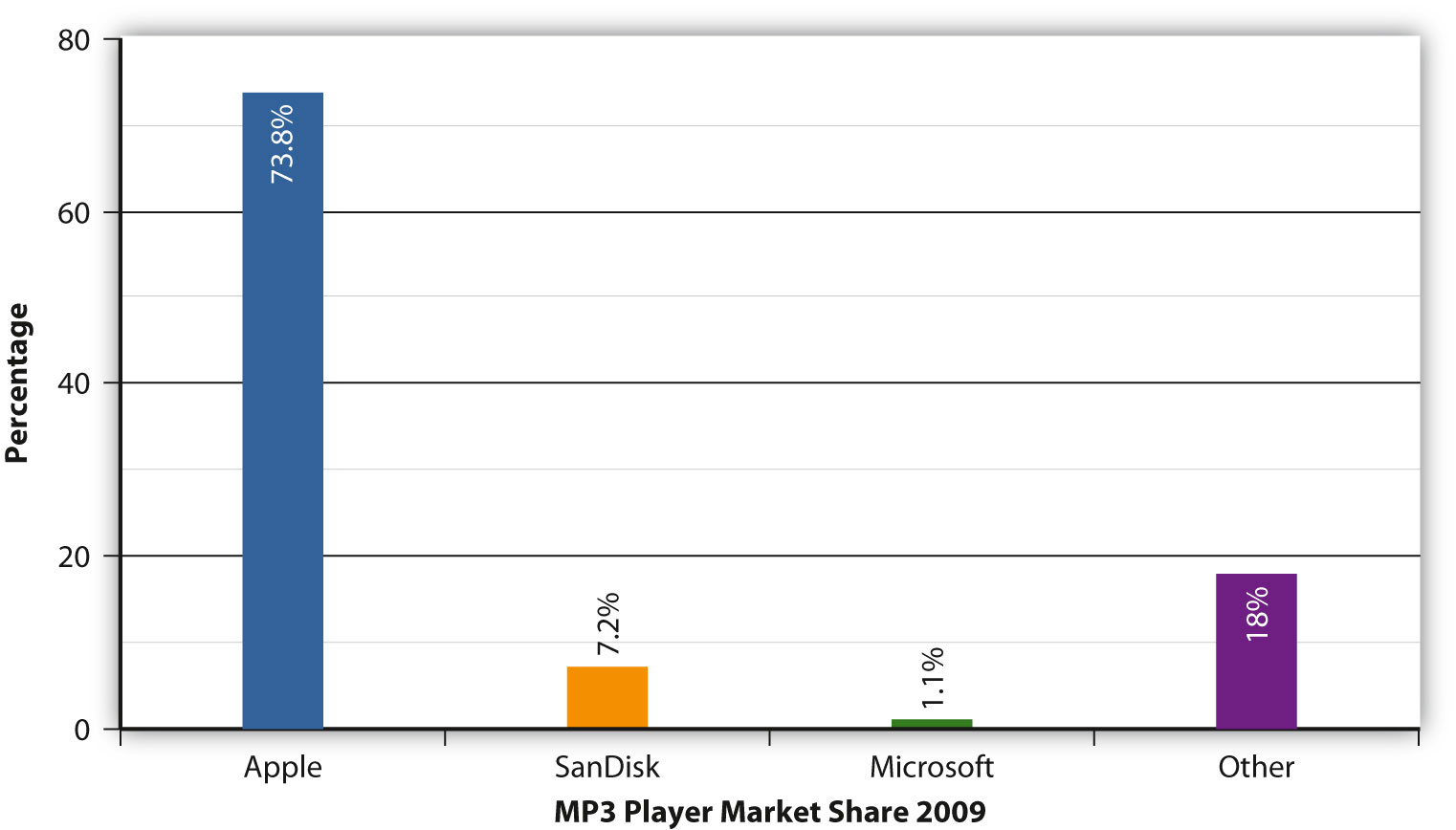
Figure 6.20
Since its launch in 2001, Apple’s iPod has remained the biggest-selling brand of MP3 player.
Profit Division
One effect that Apple iTunes and other online retailers have had on the music industry is to shake up the way that profits are divided among artists and record labels. Because of the unanticipated boom in digital record sales, recording artists and their publishers were unprepared for the possibility that they might need to renegotiate their contracts to include digital downloads. Many artists discovered to their cost that their contracts predated the digital download era, leaving them open to exploitative royalty rates for digital downloads of songs and ringtones.
As downloads have declined and streaming has risen, the debate has shifted to how streaming revenues are split. Many artists and industry observers argue that per-stream payouts are too low.
The very definition of digital royalties is still under negotiation—should a download be classified as licensed use of an artist’s music (which nets the artist approximately 50 percent of the download fee in royalties), or should it be classified as a retail sale (which nets the artist approximately 12 percent of the download fee in royalties)? The answer depends on the contractual agreement between artists and record labels. In 2009, rapper Eminem’s publishing company FBT Productions sued Universal Music Group for $1.6 million of unpaid royalties, arguing that the downloads should fall under the “licensing” agreements that cover physical releases such as CDs, rather than the “distribution” agreements put forth by Universal Music Group. A jury agreed that a song sold online is no different from a song bought in a store and ruled in favor of the record label.
Because online retailers such as Apple are responsible for the marketing, management, and delivery of downloaded music, record labels’ overheads are much lower. This new industry trend has prompted many artists and publishers to demand a bigger share of labels’ profits. As of 2010, a $0.99 download from the iTunes appliance program generates $0.30 for Apple and $0.70 for the record label, of which $0.09 goes to the songwriter and publisher as a standard mechanical royalty.
CD Sales
The rise of digital music in the early 2000s drastically reduced CD sales. Today, CDs make up a small fraction of music revenue, though they retain a niche market among collectors.
To partially make up for lost sales, the music industry has been generating revenue through licensing fees, including fees for ringtones, music played on Internet radio stations such as MySpace Music and Pandora, and music videos on the YouTube video-sharing website that is owned by Google. In 2009, digital licensing revenue reached $84 million and continues to grow. Meanwhile, recording artists are focusing their attention on live performances and merchandise, which have become their main source of revenue. Demand for concert tickets rose at least 7 percent in 2008 to $4.2 billion, according to touring industry trade magazine Pollstar.
Utilizing the Internet: A New Level of Indie
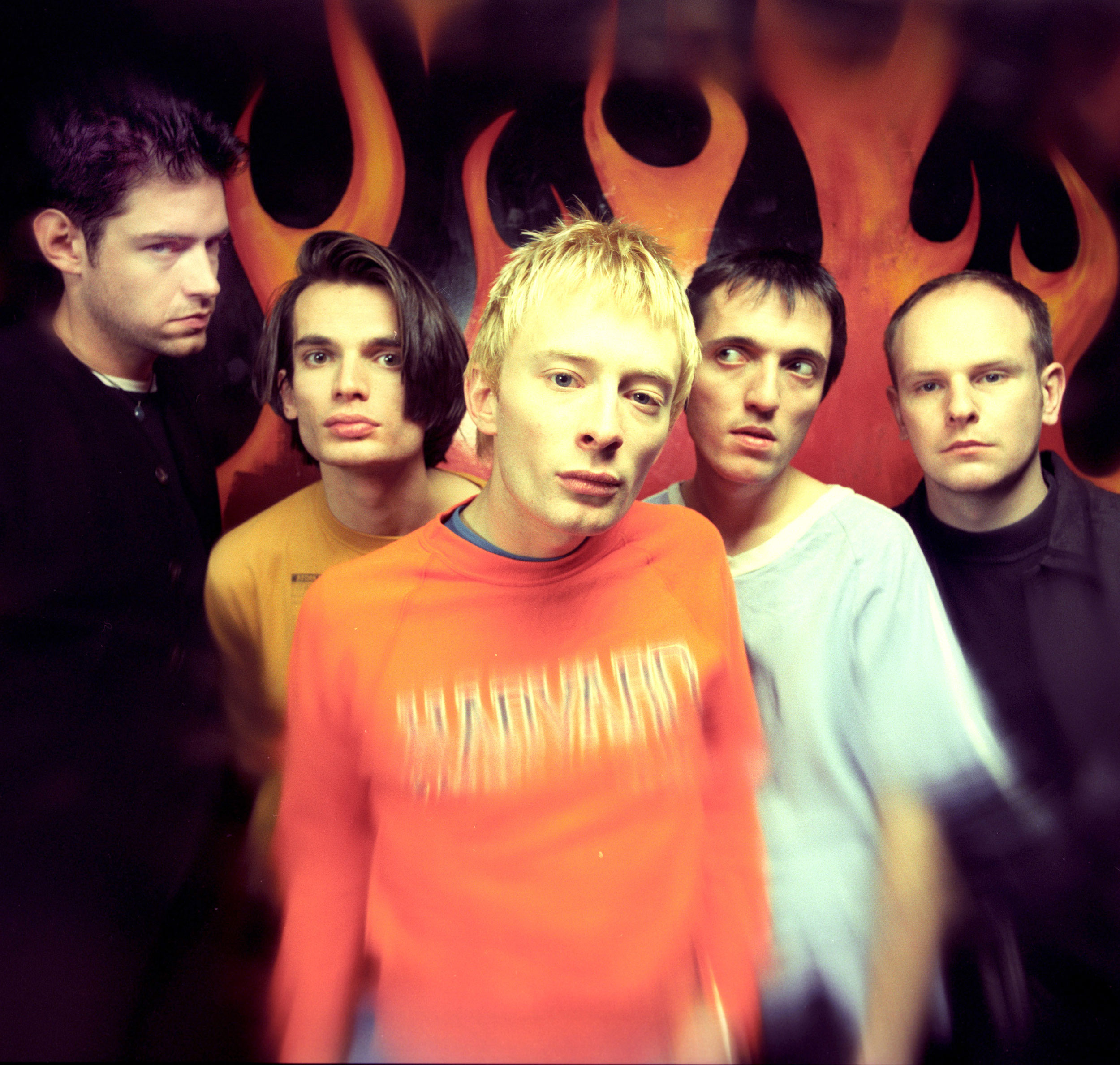
Figure 6.22
Artists such as Nine Inch Nails and Radiohead are abandoning the traditional music industry model in favor of marketing their songs directly to fans.
Over the past two decades, the Internet has leveled the playing field between major and independent record labels. Indie artists now use platforms like Bandcamp, SoundCloud, and TikTok, in addition to social media, to promote music and connect with fans.
Although a few indie artists have become household names entirely through the buzz generated on social networking sites, many others find that they need some guidance. The direct-to-fan model has evolved to include tools like Bandcamp and Patreon, allowing artists to sell music and merchandise, stream concerts, and engage supporters directly. The companies offer social networking applications that enable fans to purchase music directly from the artists rather than being redirected to a third-party website. Other advantages for bands include automatic updates to fans across a variety of networking sites, digital distribution through the iTunes appliance program and other stores, and real-time sales updates.
Many established artists have also embraced the direct-to-fan business model. In 2007, Nine Inch Nails frontman Trent Reznor announced that the band was splitting from its contractual obligations to Universal Music Group to distribute its next albums independently. Well known for his vocal distaste of major record labels and their profiteering, Reznor encouraged fans in Australia to steal his album Year Zero because he believed it was priced too highly there. Commenting on the state of the music industry in a 2007 interview he said, “I’ve got a battle where I’m trying to put out quality material that matters and I’ve got fans that feel it’s their right to steal it and I’ve got a company that’s so bureaucratic and clumsy and ignorant and behind the times they don’t know what to do, so they rip the people off.” Following the band’s split with Universal, they released studio album The Slip as a free digital download in 2008. Reznor stated, “[t]his one’s on me,” on his website, thanking fans for their loyalty. The album was downloaded 1.4 million times within the first 6 weeks of its release. A similar technique used by tech-savvy alternative band Radiohead reaped even higher rewards in 2007, when its retail release of In Rainbows entered the album chart at No. 1 even though the digital version had been offered online at a price of the customer’s choosing several months earlier (see Chapter 11 for more information about Radiohead’s In Rainbows release). The web-based direct release model allows bands such as Radiohead and Nine Inch Nails to obtain vital information about their fan bases—including email addresses—that they can use for future promotions. Whether or not the practice proves to be a passing fad, the traditional music industry model is shifting as new technology makes it easier for artists to communicate directly with their fans.
Key Takeaways
The introduction of digital music technology and peer-to-peer file sharing in 1999 changed the nature of the music industry. Websites, such as the Napster service, which enabled users to share free music, negatively impacted CD sales. Although the RIAA successfully shut down Napster, other sites emerged throughout the early 2000s, such as the Gnutella network and the Kazaa service. Rather than figuring out a way to make money from digital music, the recording industry focused its efforts on bringing lawsuits against illegal downloaders. By the time iTunes and other fee-based music sites became available, irreversible damage had been done to the industry’s sales figures.
Apple’s iTunes Store is the dominant digital music retailer in the United States, commanding almost 70 percent of the digital music market. The boom in digital music sales has affected the music industry in several ways: It has changed the way that profits are distributed among recording artists and labels, it has caused a massive decline in CD sales, and it has prompted industry executives to seek profits elsewhere (for example, through licensing fees).
The Internet has proved advantageous for smaller indie labels that take advantage of blogging, social networking sites, and video websites as a means to promote their music.
Streaming platforms such as Spotify, Apple Music, and YouTube Music have replaced downloads as the primary mode of music consumption, reshaping revenue models, artist exposure, and consumer behavior.
Exercise \(\PageIndex{1}\)
Compare the features and pricing models of major music streaming platforms such as Spotify, Apple Music, Amazon Music, and YouTube Music. What differences do you notice in their user experiences, subscription options, and artist compensation models? Survey your peers: Which platforms do they prefer, and why?
End-of-Chapter Assessment
Review Questions
Questions for Section 5.1
How did Tin Pan Alley influence the development of popular music, and how did the music that came out of Tin Pan Alley differ from classical music?
What are some of the technological developments that influenced the growth of popular music, and how did they assist its progress?
What genres of music developed throughout the 20th century? What musical elements characterize each genre?
Questions for Section 5.2
What cultural factors influenced the popular music industry in the 20th century?
How did music influence culture in the 20th century? How are music and culture interrelated?
Questions for Section 5.3
What are the Big Three record labels? In what ways do they influence the music industry?
What are the main differences between major labels and indie labels? What are the advantages and disadvantages of each?
What three steps are involved in the music production process? What factors are currently affecting the ways in which music is produced and distributed?
Questions for Section 5.5
How did peer-to-peer sharing networks affect the music business when they were first introduced? How did digital music progress from users downloading music illegally to purchasing from online music stores?
What are some of the impacts that digital music has had on the industry? How are industry executives responding to these impacts?
What is the direct-to-fan business model, and how has new technology enabled its progression?
Critical Thinking Questions
Does music primarily reflect or influence cultural and social change?
How did the major record labels’ reaction to peer-to-peer file sharing place them at a strategic disadvantage in the music industry?
What are the potential implications of the direct-to-fan business model for the future of the music industry?
Music critics frequently proclaim the “death of rock and roll.” How might the corporate influence of the Big Four over the modern music industry be related to these claims?
How have social and political factors influenced musical tastes throughout the past century?
Career Connection
Although many traditional music industry careers are in decline as a result of poor CD sales and the impact of new technology, changes within the industry have created new opportunities. As artists turn away from recorded music and focus on live performances, demand for concert tickets continues to rise. One possible career path in the music industry is that of a concert promoter. Read about the demands and expectations of a concert promoter at http://entertainment.howstuffworks.com/concert-tour2.htm. Once you have familiarized yourself with the material, read about the personal experiences of concert promoter David Werlin at http://www.bankrate.com/brm/news/advice/19990701a.asp and answer the following questions:
What advantages and disadvantages does Werlin give for working for a big promotion company versus working for a small organization?
How do both the HowStuffWorks website and Werlin’s experiences emphasize the need for flexibility when working as a concert promoter?
As with many careers, working as a concert promoter usually involves starting at the bottom and working your way to the top. Think about how you might promote an event on your college campus or in your neighborhood. Use the tips from both websites to make a list of things you would need to consider to prepare for the event.