Social Sci LibreTexts

3.2: Cognitivism

  • Page ID
    225726
  • \( \newcommand{\vecs}[1]{\overset { \scriptstyle \rightharpoonup} {\mathbf{#1}} } \)

    \( \newcommand{\vecd}[1]{\overset{-\!-\!\rightharpoonup}{\vphantom{a}\smash {#1}}} \)

    \( \newcommand{\dsum}{\displaystyle\sum\limits} \)

    \( \newcommand{\dint}{\displaystyle\int\limits} \)

    \( \newcommand{\dlim}{\displaystyle\lim\limits} \)

    \( \newcommand{\id}{\mathrm{id}}\) \( \newcommand{\Span}{\mathrm{span}}\)

    ( \newcommand{\kernel}{\mathrm{null}\,}\) \( \newcommand{\range}{\mathrm{range}\,}\)

    \( \newcommand{\RealPart}{\mathrm{Re}}\) \( \newcommand{\ImaginaryPart}{\mathrm{Im}}\)

    \( \newcommand{\Argument}{\mathrm{Arg}}\) \( \newcommand{\norm}[1]{\| #1 \|}\)

    \( \newcommand{\inner}[2]{\langle #1, #2 \rangle}\)

    \( \newcommand{\Span}{\mathrm{span}}\)

    \( \newcommand{\id}{\mathrm{id}}\)

    \( \newcommand{\Span}{\mathrm{span}}\)

    \( \newcommand{\kernel}{\mathrm{null}\,}\)

    \( \newcommand{\range}{\mathrm{range}\,}\)

    \( \newcommand{\RealPart}{\mathrm{Re}}\)

    \( \newcommand{\ImaginaryPart}{\mathrm{Im}}\)

    \( \newcommand{\Argument}{\mathrm{Arg}}\)

    \( \newcommand{\norm}[1]{\| #1 \|}\)

    \( \newcommand{\inner}[2]{\langle #1, #2 \rangle}\)

    \( \newcommand{\Span}{\mathrm{span}}\) \( \newcommand{\AA}{\unicode[.8,0]{x212B}}\)

    \( \newcommand{\vectorA}[1]{\vec{#1}}      % arrow\)

    \( \newcommand{\vectorAt}[1]{\vec{\text{#1}}}      % arrow\)

    \( \newcommand{\vectorB}[1]{\overset { \scriptstyle \rightharpoonup} {\mathbf{#1}} } \)

    \( \newcommand{\vectorC}[1]{\textbf{#1}} \)

    \( \newcommand{\vectorD}[1]{\overrightarrow{#1}} \)

    \( \newcommand{\vectorDt}[1]{\overrightarrow{\text{#1}}} \)

    \( \newcommand{\vectE}[1]{\overset{-\!-\!\rightharpoonup}{\vphantom{a}\smash{\mathbf {#1}}}} \)

    \( \newcommand{\vecs}[1]{\overset { \scriptstyle \rightharpoonup} {\mathbf{#1}} } \)

    \( \newcommand{\vecd}[1]{\overset{-\!-\!\rightharpoonup}{\vphantom{a}\smash {#1}}} \)

    \(\newcommand{\avec}{\mathbf a}\) \(\newcommand{\bvec}{\mathbf b}\) \(\newcommand{\cvec}{\mathbf c}\) \(\newcommand{\dvec}{\mathbf d}\) \(\newcommand{\dtil}{\widetilde{\mathbf d}}\) \(\newcommand{\evec}{\mathbf e}\) \(\newcommand{\fvec}{\mathbf f}\) \(\newcommand{\nvec}{\mathbf n}\) \(\newcommand{\pvec}{\mathbf p}\) \(\newcommand{\qvec}{\mathbf q}\) \(\newcommand{\svec}{\mathbf s}\) \(\newcommand{\tvec}{\mathbf t}\) \(\newcommand{\uvec}{\mathbf u}\) \(\newcommand{\vvec}{\mathbf v}\) \(\newcommand{\wvec}{\mathbf w}\) \(\newcommand{\xvec}{\mathbf x}\) \(\newcommand{\yvec}{\mathbf y}\) \(\newcommand{\zvec}{\mathbf z}\) \(\newcommand{\rvec}{\mathbf r}\) \(\newcommand{\mvec}{\mathbf m}\) \(\newcommand{\zerovec}{\mathbf 0}\) \(\newcommand{\onevec}{\mathbf 1}\) \(\newcommand{\real}{\mathbb R}\) \(\newcommand{\twovec}[2]{\left[\begin{array}{r}#1 \\ #2 \end{array}\right]}\) \(\newcommand{\ctwovec}[2]{\left[\begin{array}{c}#1 \\ #2 \end{array}\right]}\) \(\newcommand{\threevec}[3]{\left[\begin{array}{r}#1 \\ #2 \\ #3 \end{array}\right]}\) \(\newcommand{\cthreevec}[3]{\left[\begin{array}{c}#1 \\ #2 \\ #3 \end{array}\right]}\) \(\newcommand{\fourvec}[4]{\left[\begin{array}{r}#1 \\ #2 \\ #3 \\ #4 \end{array}\right]}\) \(\newcommand{\cfourvec}[4]{\left[\begin{array}{c}#1 \\ #2 \\ #3 \\ #4 \end{array}\right]}\) \(\newcommand{\fivevec}[5]{\left[\begin{array}{r}#1 \\ #2 \\ #3 \\ #4 \\ #5 \\ \end{array}\right]}\) \(\newcommand{\cfivevec}[5]{\left[\begin{array}{c}#1 \\ #2 \\ #3 \\ #4 \\ #5 \\ \end{array}\right]}\) \(\newcommand{\mattwo}[4]{\left[\begin{array}{rr}#1 \amp #2 \\ #3 \amp #4 \\ \end{array}\right]}\) \(\newcommand{\laspan}[1]{\text{Span}\{#1\}}\) \(\newcommand{\bcal}{\cal B}\) \(\newcommand{\ccal}{\cal C}\) \(\newcommand{\scal}{\cal S}\) \(\newcommand{\wcal}{\cal W}\) \(\newcommand{\ecal}{\cal E}\) \(\newcommand{\coords}[2]{\left\{#1\right\}_{#2}}\) \(\newcommand{\gray}[1]{\color{gray}{#1}}\) \(\newcommand{\lgray}[1]{\color{lightgray}{#1}}\) \(\newcommand{\rank}{\operatorname{rank}}\) \(\newcommand{\row}{\text{Row}}\) \(\newcommand{\col}{\text{Col}}\) \(\renewcommand{\row}{\text{Row}}\) \(\newcommand{\nul}{\text{Nul}}\) \(\newcommand{\var}{\text{Var}}\) \(\newcommand{\corr}{\text{corr}}\) \(\newcommand{\len}[1]{\left|#1\right|}\) \(\newcommand{\bbar}{\overline{\bvec}}\) \(\newcommand{\bhat}{\widehat{\bvec}}\) \(\newcommand{\bperp}{\bvec^\perp}\) \(\newcommand{\xhat}{\widehat{\xvec}}\) \(\newcommand{\vhat}{\widehat{\vvec}}\) \(\newcommand{\uhat}{\widehat{\uvec}}\) \(\newcommand{\what}{\widehat{\wvec}}\) \(\newcommand{\Sighat}{\widehat{\Sigma}}\) \(\newcommand{\lt}{<}\) \(\newcommand{\gt}{>}\) \(\newcommand{\amp}{&}\) \(\definecolor{fillinmathshade}{gray}{0.9}\)
    Learning Objectives
    1. Explain how cognitivist theories view learning as internal mental processes.
    2. Summarize key contributions of Freud, Erikson, and Kohlberg to developmental theory, including their stage-based models.

    Cognitivism

    Cognitivism is an umbrella for theories of learning that focus on how information is received, organized, stored, and/or retrieved by the mind. It uses the mind as an information processor, and looks beyond observable behavior, viewing learning as internal mental processes. Some notable cognitivists include:

    • Sigmund Freud- Psychosexual Theory
    • Erik Erikson- Theory of Psychosocial Development
    • Lawrence Kohlberg- Theory of Moral Development
    • Jean Piaget could also be listed here

    Sigmund Freud’s Psychosexual Theory
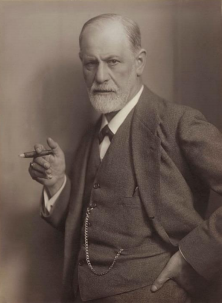
    We begin with the often-controversial figure, Sigmund Freud (1856-1939). Freud has been a very influential figure in the field of development; his views on development and psychopathology dominated psychiatry until the rise of behaviorism in the 1950s. His assumptions that personality forms during the first few years of life and that how parents or other caregivers interact with children have a long-lasting impact on children’s emotional states have guided parents, educators, clinicians, and policy-makers for many years. We have only recently begun to recognize that early childhood experiences do not always lead to specific personality traits or emotional states. There is a growing body of literature addressing resilience in children who come from harsh backgrounds and yet develop without damaging emotional scars (O’Grady and Metz, 1987). Freud has stimulated an enormous amount of research and generated many ideas. Agreeing with Freud’s theory in its entirety is hardly necessary for appreciating the contribution he has made to the field of development.

    Portrait of Sigmund Freud holding a cigar
    Figure \(\PageIndex{1}\): Sigmund Freud. Image is in the public domain.

    Freud’s theory of the self suggests that there are three parts of the self.

    • The id is the part of the self that is inborn. It responds to biological urges without pause and is guided by the principle of pleasure: if it feels good, it is the thing to do. A newborn is all id. The newborn cries when hungry, defecates when the urge strikes.
    • The ego develops through interaction with others and is guided by logic or the reality principle. It has the ability to delay gratification. It knows that urges have to be managed. It mediates between the id and superego using logic and reality to calm the other parts of the self.
    • The superego represents society’s demands for its members. It is guided by a sense of guilt. Values, morals, and the conscience are all part of the superego.

    The personality is thought to develop in response to the child’s ability to learn to manage biological urges. Parenting is important here. If the parent is either overly punitive or lax, the child may not progress to the next stage. Here is a brief introduction to Freud’s stages.

    Table \(\PageIndex{1}\): Sigmund Freud’s Psychosexual Theory
    Name of Stage Descriptions of Stage
    Oral Stage The oral stage lasts from birth until around age 2. The infant is all id. At this stage, all stimulation and comfort is focused on the mouth and is based on the reflex of sucking. Too much indulgence or too little stimulation may lead to fixation.
    Anal Stage The anal stage coincides with potty training or learning to manage biological urges. The ego begins to develop at this stage. Anal fixation may result in a person who is compulsively clean and organized or one who is sloppy and lacks self-control.
    Phallic Stage The phallic stage occurs in early childhood and marks the development of the superego and a sense of masculinity or femininity, as culture dictates.
    Latency Latency occurs during middle childhood when a child’s urges quiet down and friendships become the focus. The ego and superego can be refined as the child learns how to cooperate and negotiate with others.
    Genital Stage

    The genital stage begins with puberty and continues through adulthood. Now the preoccupation is that of sex and reproduction.

    Strengths and Weaknesses of Freud’s Theory

    Freud’s theory has been heavily criticized for several reasons. So why do we study Freud? As mentioned above, despite the criticisms, Freud’s assumptions about the importance of early childhood experiences in shaping our psychological selves have been incorporated into child development, education, and parenting practices. Freud’s theory has heuristic value in providing a framework from which to elaborate and modify subsequent theories of development. Many later theories, particularly behaviorism and humanism, challenged Freud’s views.22

    Video Video Description and Text Link

    Criticisms of Freud's Ideas by Heather Carter

    Text link: https://www.youtube.com/watch?v=gqCbKl0ia_Q

    Main Points to Note About Freud’s Psychosexual Theory

    Freud believed that:

    • Development in the early years has a lasting impact.
    • There are three parts of the self: the id, the ego, and the superego
    • People go through five stages of psychosexual development: the oral stage, the anal stage, the phallic stage, latency, and the genital stage

    We study Freud because his assumptions about the importance of early childhood experiences provide a framework for later theories (both elaborating and contradicting/challenging his work).

    Erik Erikson’s Psychosocial Theory

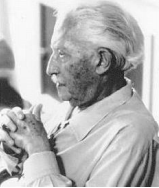
    Now, let’s turn to a less controversial theorist, Erik Erikson. Erikson (1902-1994) suggested that our relationships and society’s expectations motivate much of our behavior in his theory of psychosocial development. Erikson was a student of Freud’s but emphasized the importance of the ego, or conscious thought, in determining our actions. In other words, he believed that unconscious urges do not drive us. We know what motivates us, and we consciously think about how to achieve our goals. He is considered the father of developmental psychology because his model provides a guideline for the entire lifespan and suggests certain primary psychological and social concerns at various stages of life.

    Profile picture of an older Erik Erikson sitting with hands clasped in front of him.
    Figure \(\PageIndex{2}\): Erik Erikson. Image is in the public domain.

    Erikson expanded on Freud’s work by emphasizing the importance of culture in parenting practices and motivations, and added three stages of adult development (Erikson, 1950; 1968).

    He believed that we are aware of what motivates us throughout life, and the ego has greater importance in guiding our actions than does the id. We make conscious choices in life, and these choices focus on meeting certain social and cultural needs rather than purely biological ones. Humans are motivated, for instance, by the need to feel that the world is a trustworthy place, that we are capable individuals, that we can make a contribution to society, and that we have lived a meaningful life. These are all psychosocial problems.

    Erikson divided the lifespan into eight stages. In each stage, we have a major psychosocial task to accomplish or a crisis to overcome. Erikson believed that our personality continues to take shape throughout our lifespan as we face these challenges in living. Here is a brief overview of the eight stages:

    Table \(\PageIndex{2}\): Erik Erikson’s Psychosocial Theory
    Name of Stage Description of Stage
    Trust vs. mistrust (0-1)

    The infant must have their basic needs met consistently to feel that the world is a trustworthy place.

    Autonomy vs. shame and doubt (1-2) Mobile toddlers have newfound freedom; they like to exercise, and by being allowed to do so, they learn some basic independence.
    Initiative vs. Guilt (3-5)

    Preschoolers like to initiate activities and emphasize doing things “all by myself.”

    Industry vs. inferiority (6- 11) School-aged children focus on their accomplishments and begin making comparisons with their classmates.
    Identity vs. role confusion (adolescence) Teenagers are trying to gain a sense of identity as they experiment with various roles, beliefs, and ideas.
    Intimacy vs. Isolation (young adulthood) In our 20s and 30s we are making some of our first long-term commitments in intimate relationships.
    Generativity vs. stagnation (middle adulthood) In our 40s through our early 60s, we focus on being productive at work and home, and are motivated by wanting to feel that we have contributed to society.
    Integrity vs. Despair (late adulthood) We look back on our lives and hope to like what we see, that we have lived well and have a sense of integrity because we lived according to our beliefs.

    These eight stages form a foundation for discussions on emotional and social development throughout the lifespan. Keep in mind, however, that these stages or crises can occur more than once. For instance, a person may struggle with a lack of trust beyond infancy under certain circumstances. Erikson’s theory has been criticized for focusing heavily on stages and assuming that completing one stage is a prerequisite for the next stage of development. His theory also focuses on the social expectations that are found in certain cultures, but not in all. For instance, the idea that adolescence is a time of searching for identity might translate well in the middle-class culture of the United States, but not as well in cultures where the transition into adulthood coincides with puberty through rites of passage and where adult roles offer fewer choices.24

    Video Video Description and Text Link

    Erikson's theory of psychosocial development identifies eight stages in which a healthy individual should pass through from birth to death. At each stages we encounter different needs, ask new questions and meet people who influence our behavior and learning. 8 Stages of Development by Erikson by Sprouts.

    Text link: https://www.youtube.com/watch?v=aYCBdZLCDBQ

    Main Points to Note About Erikson’s Psychosocial Theory

    Erikson was a student of Freud but focused on conscious thought.

    • His stages of psychosocial development address the entire lifespan and suggest a primary psychosocial crisis in some cultures that adults can use to understand how to support children’s social and emotional development.
    • The stages include: trust vs. mistrust, autonomy vs. shame and doubt, initiative vs. guilt, industry vs. inferiority, identity vs. role confusion, intimacy vs. isolation, generativity vs. stagnation, and integrity vs. despair.

    Lawrence Kohlberg's Theory of Moral Development

    Kohlberg (1963) built on Piaget's work and was interested in understanding how our moral reasoning changes as we age. He wanted to find out how people decide what is right and what is wrong. Just as Piaget believed that children’s cognitive development follows specific patterns, Kohlberg (1984) argued that we learn our moral values through active thinking and reasoning, and that moral development follows a series of stages. Kohlberg’s six stages are generally organized into three levels of moral reasoning. To study moral development, Kohlberg posed moral dilemmas to children, teenagers, and adults, such as the following:

    A man’s wife is dying of cancer and there is only one drug that can save her. The only place to get the drug is at the store of a pharmacist who is known to overcharge people for drugs. The man can only pay $1,000, but the pharmacist wants $2,000, and refuses to sell it to him for less, or to let him pay later. Desperate, the man later breaks into the pharmacy and steals the medicine. Should he have done that? Was it right or wrong?

    Why? (Kohlberg, 1984)

    Table \(\PageIndex{2}\) Lawrence Kohlberg’s Levels of Moral Reasoning

    Age

    Moral Level

    Description

    Young children- usually prior to age 9

    Preconventional morality

    Stage 1: Focus is on self-interest, and punishment is avoided. The man shouldn’t steal the drug, as he may get caught and go to jail.

    Stage 2: Rewards are sought. A person at this level will argue that the man should steal the drug because he does not want to lose his wife, who takes care of him.

    Older children, adolescents, and most adults

    Conventional morality

    Stage 3: Focus is on how situational outcomes impact others and wanting to please and be accepted. The man should steal the drug because that is what good husbands do.

    Stage 4: People make decisions based on laws or formalized rules. The man should obey the law because stealing is a crime.

    Rare with adolescents and few adults

    Postconventional morality

    Stage 5: Individuals employ abstract reasoning to justify behaviors. The man should steal the drug because laws can be unjust, and you have to consider the whole situation.

    Stage 6: Moral behavior is based on self-chosen ethical principles. The man should steal the drug because life is more important than property.

    Although research has supported Kohlberg’s idea that moral reasoning evolves from an early emphasis on punishment and social rules and regulations to a focus on more general ethical principles, like Piaget’s approach, Kohlberg’s stage model is probably too simplistic. For one, people may use higher levels of reasoning for some types of problems, but revert to lower levels in situations where doing so is more consistent with their goals or beliefs (Rest, 1979). Second, it has been argued that the stage model is particularly appropriate for Western, rather than non-Western, samples in which allegiance to social norms, such as respect for authority, may be particularly important (Haidt, 2001). In addition, there is frequently little correlation between how we score on the moral stages and how we behave in real life.

    Perhaps the most important critique of Kohlberg’s theory is that it may describe the moral development of males better than it describes that of females. Gilligan (1982) has argued that, due to differences in their socialization, males tend to value principles of justice and rights, while females tend to value caring for and helping others. Although there is little evidence for a gender difference in Kohlberg’s stages of moral development (Turiel, 1998), it is true that girls and women tend to focus more on issues of caring, helping, and connecting with others than do boys and men (Jaffee & Hyde, 2000).25

    Video Video Description and Text Link

    Kohlber's Theory of Moral Development created by Shreena Desai

    Text link: https://www.youtube.com/watch?v=Onkd8tChC2A

    References, Contributors and Attributions

    20. Introduction to Developmental Theories by Lumen Learning is licensed under CC BY 4.0

    22. Psychodynamic Theory by Lumen Learning is licensed under CC BY 4.0; Lecture Transcript: Developmental Theories by Lumen Learning is licensed under CC BY 4.0

    24. Psychosocial Theory by Lumen Learning is licensed under CC BY 4.0

    25. Kohlberg's Stages of Moral Development by Lumen Learning is licensed under CC BY 4.0; Authored by: Martha Lally and Suzanne Valentine-French. Provided by: College of Lake County Foundation. Located at: http://dept.clcillinois.edu/psy/LifespanDevelopment.pdf. License: CC BY-NC-SA: Attribution-NonCommercial-ShareAlik


    This page titled 3.2: Cognitivism is shared under a CC BY-NC 4.0 license and was authored, remixed, and/or curated by Heather Carter.